The University of Birmingham has launched a large scale rare earth magnet recycling facility in the West Midlands that aims to reduce the United Kingdom's reliance on imported rare earth metals, alloys and magnets. The new operation, located at Tyseley Energy Park in Birmingham, is designed to recover magnets from end-of-life products and feed recycled material back into domestic manufacturing.
Rare earth magnets are a critical component in many modern technologies, including wind turbines, electric vehicles, medical equipment, pumps, robotics and electronics. Demand for these materials is expected to rise as low carbon technologies are deployed at scale, making secure supplies of rare earth elements a key part of the UK's industrial and energy strategy.
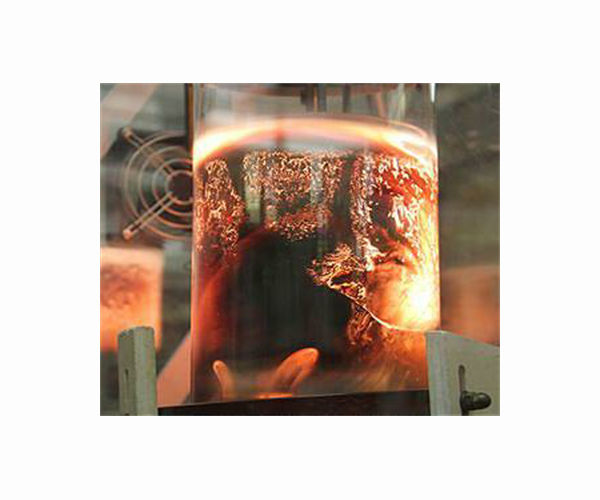
The Birmingham facility uses a hydrogen based recycling route known as Hydrogen Processing of Magnet Scrap, or HPMS, developed by researchers at the University of Birmingham. HPMS enables efficient extraction of rare earth magnets from complex end-of-life products without full disassembly, turning discarded equipment into a new UK source of rare earth feedstock for metals, alloys and magnets.
The new plant scales up earlier proof-of-concept work. A previous pilot facility handled batches of 50 to 100 kilograms, while the Tyseley site can now recover more than 400 kilograms of rare earth alloy per batch. At its initial operating mode of a single shift, the facility can produce around 100 tonnes of new sintered magnets per year, with capacity rising to more than 300 tonnes annually on multiple shifts.
Magnets produced through HPMS based recycling can be manufactured at lower environmental impact and cost than those made from newly mined material. According to the University of Birmingham team, recycling end-of-life products such as hard disk drives, electric motors, wind turbine components, robotic actuators, pumps, filters and electronic equipment can deliver carbon dioxide savings of about 90 percent compared with producing magnets from ore.
The processing line reintroduces sintered rare earth magnet production to the UK for the first time in a quarter of a century. It is designed to handle both primary production based on alloys and metals and secondary production from recycled magnet containing scrap, reinforcing the UK's midstream capabilities in critical materials.
The facility supports the UK's updated Vision 2035: Critical Minerals Strategy, published by the government in November 2025. That strategy sets out how the country plans to strengthen resilience in strategic raw materials, including by expanding domestic production, developing recycling capacity and building international partnerships.
Industry minister Chris McDonald said the plant demonstrates that the UK can combine industrial policy with technological expertise in rare earth recycling. He described the project as a practical example of the Critical Minerals Strategy in action, bringing sintered magnet manufacturing back to the country after 25 years and backing supply chain projects that can underpin green industries.
Rare earth magnet recycling forms part of wider research activities at the University of Birmingham in areas such as battery recycling, robotic disassembly, chemical recovery and energy storage. The institution is pursuing complete circular solutions for critical minerals, using university led research to support national resilience and sustainability objectives.
Professor Rachel O'Reilly, Pro-Vice-Chancellor for Research at the University of Birmingham, said that building circular systems for technology-critical minerals can help the UK secure competitive advantage. She highlighted the role of university funding and national research programmes in moving innovations like HPMS from the laboratory into industrial deployment.
The Tyseley facility has received 4.5 million pounds of support from Innovate UK through the Driving the Electric Revolution Industrialisation Centres programme, alongside additional grants via the Innovate Climates Programme, the Engineering and Physical Sciences Research Council, the Advanced Propulsion Centre and EU Horizon initiatives. This funding aligns with national efforts to reach net zero and to develop cleaner technology supply chains.
Innovate UK representative Bruce Adderley said the project means the UK now has all the main elements of a rare earth permanent magnet supply chain for the first time in more than 20 years. As an open access facility, the plant gives UK companies an opportunity to collaborate with the University of Birmingham team to scale up and commercialise HPMS based recycling processes.
The Birmingham Centre for Strategic Elements and Critical Materials at the University of Birmingham has been advising on critical materials policy. In 2021, it produced a report titled Securing Technology-Critical Metals for Britain, warning that the transition from fossil fuels to electrification would increase dependence on metals such as lithium, cobalt and rare earth elements and calling for strategies that combine recycling with primary production, processing and international partnerships.
Professor Allan Walton, Head of the Magnetic Materials Group and lead investigator on the recycling programme, said the late Emeritus Professor Rex Harris began rare earth magnet recycling work at Birmingham more than two decades ago. Since then, the group has scaled up multiple processes to sense, sort, extract and purify rare earth magnets in collaboration with industrial and research partners across the value chain.
Walton said the new facility will provide recycled feedstock to multiple parts of the UK rare earth ecosystem while supporting job creation, skills development and long term economic growth. He added that the Midlands region, with its strong manufacturing heritage, is well placed to play a central role in the critical materials midstream.
Recycling technologies developed by the Magnetic Materials Group have been exclusively licensed to Hypromag Ltd, which is now wholly owned by Maginito Ltd, a subsidiary of Mkango Resources. This commercial partnership is intended to accelerate deployment of HPMS based recycling in the UK and overseas.
Mkango chief executive and Hypromag director William Dawes described the commissioning of the Birmingham plant as a landmark for rare earth supply chains, bringing magnet manufacturing back to the UK after more than 20 years. He said HPMS offers a cost advantage along with a minimal carbon footprint and provides a platform for further scale up in the UK and international roll out in Germany, the United States and other markets.
Automotive manufacturer JLR, which relies on rare earth elements for electric and connected vehicles, sees rare earth recycling as part of its wider strategy to increase circularity. JLR battery services lead David Watkin said the company is focused on reducing material usage, designing components for disassembly and shifting from virgin to recycled content as infrastructure develops, and that the UK magnet recycling facility strengthens prospects for a more resilient and lower carbon supply chain.
Research Report:Securing Technology-Critical Metals for Britain