|
 |
 |
 |
 |
 |
 |
 |
 |

 |
THEMIS Launching Aboard Delta II On Feb 15
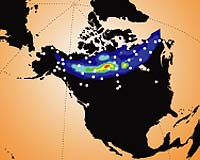
Cape Canaveral FL (SPX) Feb 09, 2007 Launch of NASA's THEMIS spacecraft is scheduled for Thursday, Feb. 15 from Pad 17-B at Cape Canaveral Air Force Station, Fla. The launch window is 6:08 to 6:26 p.m. EST, a duration of 18 minutes. NASA's Launch Services Program at the Kennedy Space Center is responsible for the launch of THEMIS aboard a Delta II rocket with the launch service being conducted by the United Launch Alliance. Should the launch be postponed for 24 hours for any reason, the launch window will extend from 6:05 to 6:23 p.m. EST. For a 48-hour postponement, the launch window will be from 6:01 to 6:19 p.m. THEMIS is an acronym for Time History of Events and Macroscale Interactions during Substorms. THEMIS consists of five identical probes that will track violent, colorful eruptions near the North Pole. This will be the largest number of scientific satellites NASA ever launched into orbit aboard a single rocket. The THEMIS mission aims to unravel the tantalizing mystery behind auroral substorms, an avalanche of magnetic energy powered by the solar wind that intensifies the northern and southern lights. The mission will investigate what causes auroras in the Earth's atmosphere to dramatically change from slowly shimmering waves of light to wildly shifting streaks of bright color. THEMIS will help to provide another piece of the puzzle that will help scientists further understand how and why these space storms create havoc with satellites, power grids and communications systems. Community Email This Article Comment On This Article Related Links Solar Science News at SpaceDaily Solar Science News at SpaceDaily
 Ulysses Spacecraft Swoops Under Sun
 Pasadena CA (JPL) Feb 07, 2007
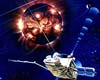
The 16-year-old Ulysses spacecraft reaches what could be considered a low point in its mission observing the sun today - and solar scientists could not be happier. The European-manufactured, joint NASA- and ESA-managed spacecraft, has reached maximum latitude in its exploration of the heliosphere, the bubble in space blown out by the solar wind. |
|
|

| The content herein, unless otherwise known to be public domain, are Copyright 1995-2007 - SpaceDaily.AFP and UPI Wire Stories are copyright Agence France-Presse and United Press International. ESA Portal Reports are copyright European Space Agency. All NASA sourced material is public domain. Additional copyrights may apply in whole or part to other bona fide parties. Advertising does not imply endorsement,agreement or approval of any opinions, statements or information provided by SpaceDaily on any Web page published or hosted by SpaceDaily. Privacy Statement |