|
 |
 |
 |
 |
 |
 |
 |
 |

 |
Spirit Studies Layers Of Volcanic Rock
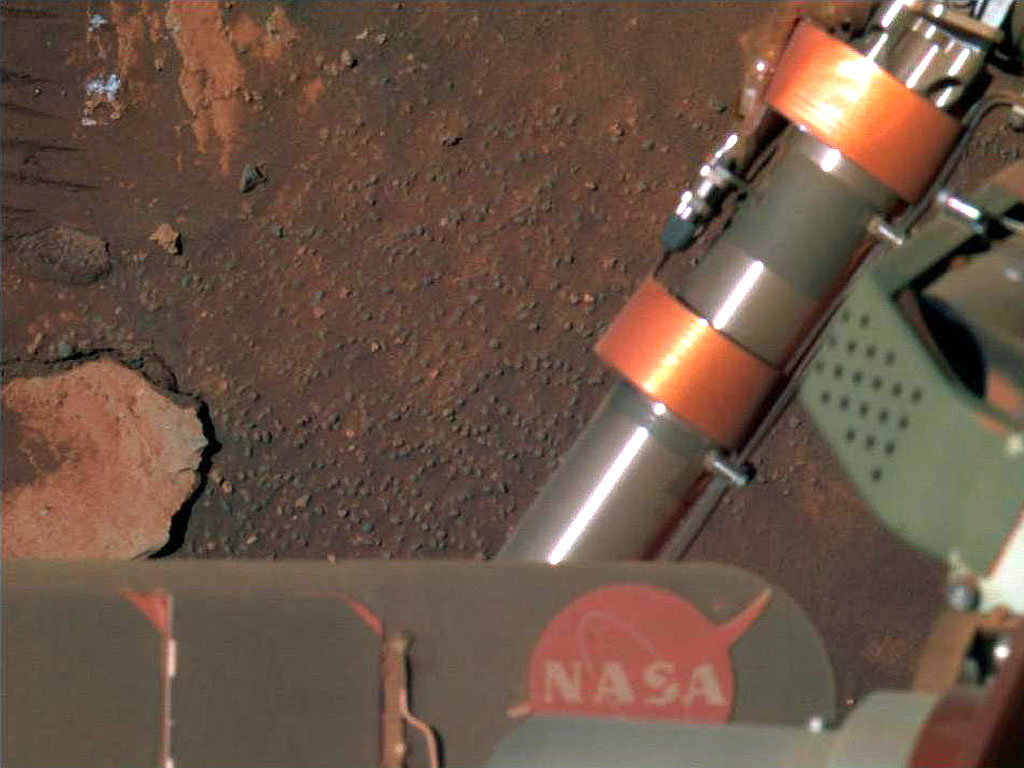
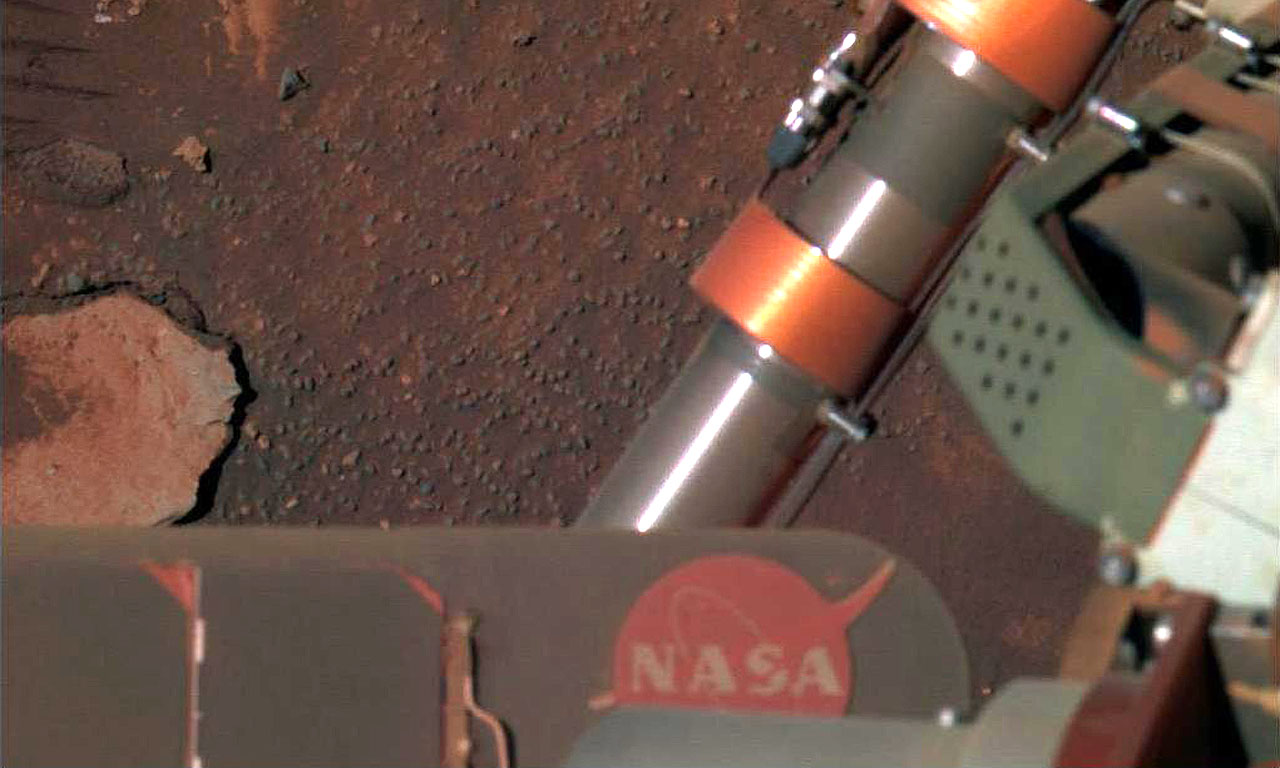
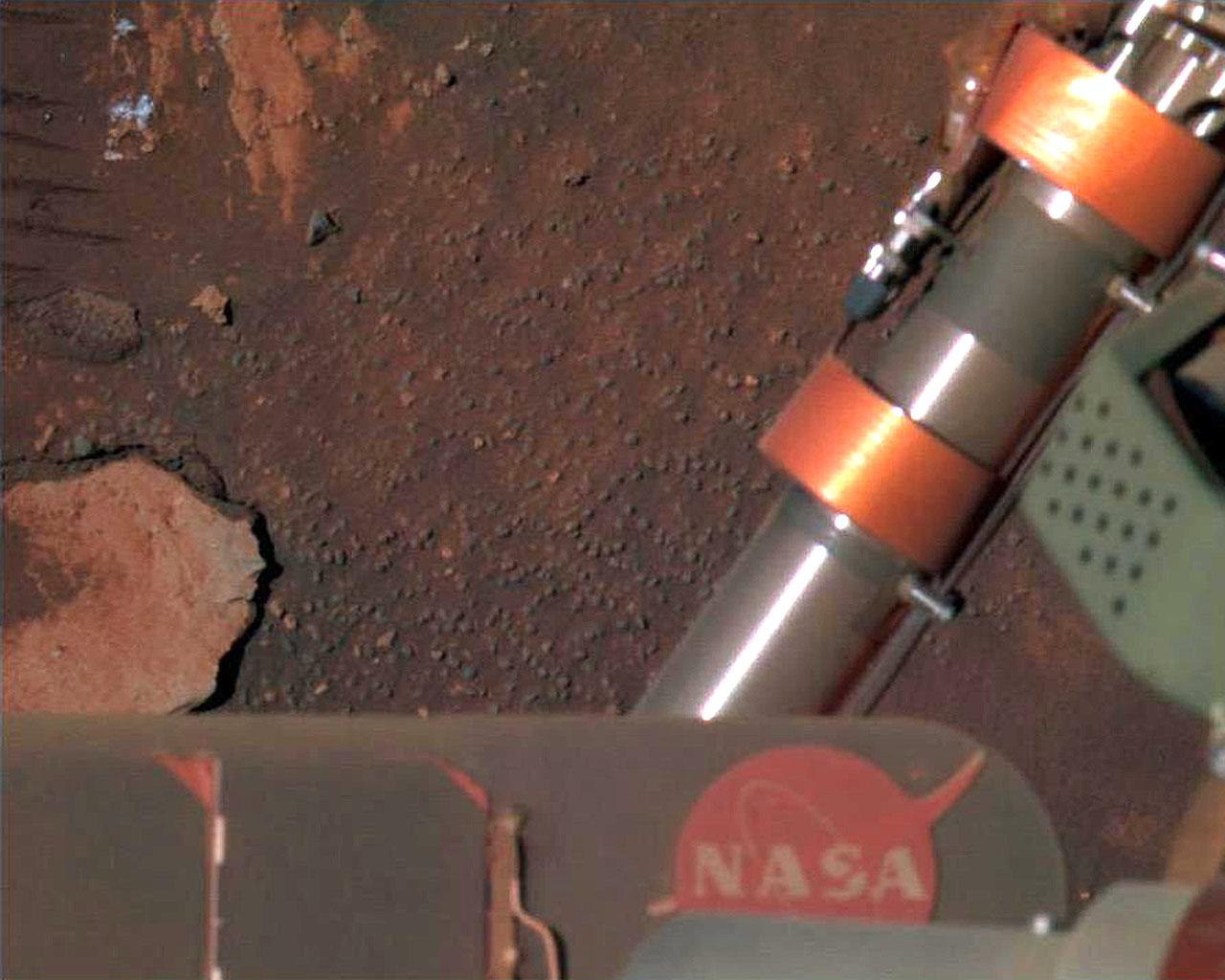
Pasadena CA (JPL) Oct 18, 2006 As Spirit enters a period known as solar conjuction, when the sun interferes with transmissions between Mars and Earth, mission planners sent a complete set of plans for science activities during solar conjunction to Spirit on the rover's 982nd sol, or Martian day, of exploring inside Gusev Crater (Oct. 7, 2006). During that time, the rover will achieve a new milestone: exploring Mars for 1,000 consecutive days. Solar conjunction will begin on sol 991 (Oct. 16, 2006) and end on sol 1015 (Nov. 10, 2006). During this period, both NASA rovers, Spirit and Opportunity, will not receive any new command loads, but they will send daily downlinks to Earth, averaging 15 megabits of data per transmission. The data will be relayed to Earth via NASA's Mars Odyssey spacecraft in orbit above Mars. Each day during conjunction, Spirit will spend 3 hours analyzing dust collected on the rover's filter magnet using the Moessbauer spectrometer and 24 minutes conducting a variety of early morning science observations. The morning science activities are designed to monitor the atmosphere and to search for any possible surface changes. The workload will make optimum use of solar power levels available with the retreat of Martian winter. Spirit is healthy and continues to make progress on the winter science campaign of experiments. The rover's solar energy levels continue to rise slowly. Solar power is currently about 300 watt-hours. One hundred watt-hours is the amount of electricity needed to light one 100-watt bulb for one hour. Sol-by-sol summary Sol 982 (Oct. 7, 2006): Spirit measured atmospheric dust opacity with the panoramic camera and surveyed the sky, ground, and dark soil in the rover's tracks using the miniature thermal emission spectrometer. Spirit took panoramic camera images of the rover's tracks and analyzed rock targets known as "Gueslaga" and "Tor" with the miniature thermal emission spectrometer. The rover measured the brightness of the morning sky in the west using the panoramic camera. Sol 983: Spirit measured atmospheric dust opacity with the panoramic camera and surveyed the sky, ground, and dark soil in the rover's tracks using the miniature thermal emission spectrometer. Spirit took a look at the elemental chemistry of the atmosphere with the alpha particle X-ray spectrometer. The rover acquired super-resolution panoramic camera images of a target called "Mitcheltree Ridgecrest 11." Sol 984: Spirit measured atmospheric dust opacity with the panoramic camera and surveyed the sky, ground, and soil in the rover's tracks using the miniature thermal emission spectrometer. Spirit analyzed a rock target dubbed "O'Higgins" with the miniature thermal emission spectrometer and referenced instrument measurements to the calibration target on the rover. The rover scanned the sky for clouds with the navigation camera, measured morning sky brightness with the panoramic camera, and monitored dust on the panoramic camera mast assembly. Sol 985: Spirit measured atmospheric opacity using the panoramic camera, surveyed the sky and ground with the miniature thermal emission spectrometer, and restarted analysis of dust collected by the filter magnets using the Moessbauer spectrometer. Spirit scanned the sky for clouds using the navigation camera and acquired thumbnail images of the sky with the panoramic camera. Sol 986: Spirit measured atmospheric opacity using the panoramic camera, checked for drift (changes with time) in the miniature thermal emission spectrometer, and surveyed the sky and ground with the miniature thermal emission spectrometer. Spirit scanned the sky for clouds using the navigation camera and acquired thumbnail images of the sky with the panoramic camera. Sol 987 (Oct. 12, 2006): Spirit measured atmospheric dust opacity using the panoramic camera, checked for drift in the miniature thermal emission spectrometer, and surveyed the sky and ground with the miniature thermal emission spectrometer. The rover restarted Moessbauer analysis of dust on the filter magnets. Spirit surveyed the sky during high sun using the panoramic camera. Odometry As of sol 986 (Oct. 11, 2006), Spirit's total odometry remained at 6,876.18 meters (4.27 miles). Community Email This Article Comment On This Article Related Links Mars Rovers at JPL Mars Rovers at Cornell Mars News and Information at MarsDaily.com Mars News and Information at MarsDaily.com Lunar Dreams and more
 NASA Orbiter Reveals New Details Of Mars Both Young And Old
 Pasadena CA (SPX) Oct 17, 2006
During its first week of observations from low orbit, NASA's newest Mars spacecraft is already revealing new clues about both recent and ancient environments on the red planet. Scientists hope the Mars Reconnaissance Orbiter will answer questions about the history and distribution of Mars' water by combining data from the orbiter's high-resolution camera, imaging spectrometer, context camera, ground-penetrating radar, atmospheric sounder, global color camera, radio and accelerometers. |
|
|

| The content herein, unless otherwise known to be public domain, are Copyright 1995-2006 - SpaceDaily.AFP and UPI Wire Stories are copyright Agence France-Presse and United Press International. ESA PortalReports are copyright European Space Agency. All NASA sourced material is public domain. Additionalcopyrights may apply in whole or part to other bona fide parties. Advertising does not imply endorsement,agreement or approval of any opinions, statements or information provided by SpaceDaily on any Web page published or hosted by SpaceDaily. Privacy Statement |