|
 |
 |
 |
 |
 |
 |
 |
 |

 |
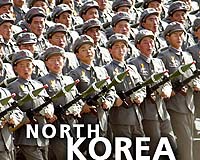
North Korean Options
UPI Outside View Commentator Washington (UPI) Nov 28, 2006 The North Korean Army with about 1 million active-duty troops is roughly three times the size of the Iraqi Army under Saddam Hussein. A unified Korea would not need such a large armed force on top of the existing 550,000-person South Korean Army. But if the North Korean Army were reduced in size or even disbanded, a large number of trained fighters would suddenly find themselves out of work and desperate to make a living at a time of economic turmoil with few available jobs. Following in the footsteps of the unemployed soldiers of the disbanded army of Saddam Hussein, many former North Korean soldiers would turn to insurgency and could go on fighting for years, seeking to strike out against the capitalist South Koreans who had taken control of their country. Proliferation of weapons of mass destruction might be one of the insurgents' few options to obtain income. There have been many efforts to compare a North Korean collapse and absorption by South Korea to the unification of East and West Germany in 1990. Unification is reported to have cost Germans about $1 trillion, and the former East Germany is still behind western standards. Yet as bad as conditions were in East Germany, conditions in North Korea are far worse. Some economists have estimated the cost of Korean unification would be several trillion dollars -- an amount that South Korea could not afford alone. Huge amounts of aid from the United States and other nations would be needed to rebuild the North Korean economy. German unification was also easier than Korean unification would be for other reasons. There was far more contact and much more open communication across the inter-German border before German unification. East Germans were not starving in the manner of the North Koreans. And no other country intervened in German unification the way that China may feel compelled to intervene in North Korea because of refugees, nuclear weapons and other factors. The world may not have much time before a North Korean regime collapse could occur. America should begin talks with China, South Korea, Japan and Russia on what happens after Kim slips into history so that the nations can work in partnership and coordination to deal with the chaos of a North Korean collapse. These five nations need to develop ways to put the North Korean military to work after unification. For example, they could set aside funds to hire the former soldiers to fix North Korea's crumbling infrastructure, much as workers in the Civilian Conservation Corps operated in the United States during the Great Depression. They could create incentives for their own domestic industries to open new factories and other facilities in what is now North Korea to create jobs and spur economic development. And the five nations could prepare initiatives to increase their imports from Korea after unification. U.S. financial commitments would clarify America's willingness to help bear the burden of Korean reunification and reconstruction. In addition, the United States needs to make longer-term commitments to not move its military forces to areas in a unified Korea where China would find them threatening. Because China, South Korea and Japan are particularly concerned about their own security, the United States should offer to provide security assistance to deny the effectiveness of attacks from a desperate North Korean regime. Such assistance could involve offering to deploy U.S. Patriot missile units in Seoul, Beijing and perhaps other cities to provide protection against North Korean nuclear attacks with ballistic missiles. On the civilian side, America should position food and perhaps transportation means in South Korea and China that could help prepare the two nations for the humanitarian disaster and huge number of refugees that could accompany North Korean regime failure. The challenge America and the world face today in deciding how to deal with North Korea is to choose between bad alternatives and worse ones. In making decisions, it's important for leaders to see the world as it is rather than as they would like it to be. If the problems in post-Saddam Hussein Iraq have taught us anything, it is to expect the unexpected and be prepared. Bruce Bennett is a senior policy analyst at the RAND Corporation, a nonprofit research organization. United Press International's "Outside View" commentaries are written by outside contributors who specialize in a variety of important issues. The views expressed do not necessarily reflect those of United Press International. In the interest of creating an open forum, original submissions are invited.
Source: United Press International Community Email This Article Comment On This Article Related Links Learn about nuclear weapons doctrine and defense at SpaceWar.com Learn about nuclear weapons doctrine and defense at SpaceWar.com Learn about missile defense at SpaceWar.com All about missiles at SpaceWar.com Learn about the Superpowers of the 21st Century at SpaceWar.com
 North Korea Policy Options
 Washington (UPI) Nov 24, 2006
In Iraq, regime change -- even when it involved the fall of a dictator whom President George W. Bush called a member of the "axis of evil" -- created many unexpected and costly problems. The same thing could happen if regime change comes to North Korea. The time to begin preparing for these problems is now. |
|
|

| The content herein, unless otherwise known to be public domain, are Copyright 1995-2006 - SpaceDaily.AFP and UPI Wire Stories are copyright Agence France-Presse and United Press International. ESA PortalReports are copyright European Space Agency. All NASA sourced material is public domain. Additionalcopyrights may apply in whole or part to other bona fide parties. Advertising does not imply endorsement,agreement or approval of any opinions, statements or information provided by SpaceDaily on any Web page published or hosted by SpaceDaily. Privacy Statement |