|
 |
 |
 |
 |
 |
 |
 |
 |

 |
First Japanese Space Tourist To Blast Off Next Month
Moscow (AFP) Aug 02, 2006 Japan's first space tourist, Daisuke Enomoto, will blast off on board a Russian spaceship headed for the International Space Station (ISS) on September 14, the Russian space agency Roskosmos said on Wednesday. "The Japanese tourist is due to go into space on September 14. He is continuing his training at Star City (near Moscow)," said spokesman Igor Panarine. "Last month, Daisuke Enomoto took a sea and land survival course in Sebastopol (Ukraine). Now he is training on a simulator of the ISS. And he is working at it with considerable determination," the spokesman added. The first Japanese space tourist is due to take off in a Soyuz capsule from the Baikonur cosmodrome in Kazakhstan, accompanied by a Russian cosmonaut, Mikhail Tiurin, and a NASA astronaut, Michael Lopez-Alegria. Enomoto, 35, who made his fortune in the Internet business, will pay nearly 20 million dollars to spend about 10 days in space. He will become the world's fourth space tourist. US millionaire Dennis Tito was the first tourist to travel in space in 2001, followed by South African Mark Shuttleworth in 2002 and American businessman Greg Olsen in 2005. Panarine said Russia's state commission for space would meet on August 30 to formally approve the date of the flight and its crew members.
Source: Agence France-Presse Community Email This Article Comment On This Article Related Links International Space Station Space Tourism, Space Transport and Space Exploration News
 NASA Uses WSI InFlight For T-38 Trainer Aircraft
 Andover MA (SPX) Aug 02, 2006
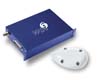
WSI Corp. announced Monday that NASA has ordered 18 WSI InFlight AV300 next-generation systems to equip a portion of the Johnson Space Center T-38N astronaut trainer/proficiency aircraft fleet. NASA will take delivery of the current WSI InFlight AV200 systems for installation in the fleet followed by replacement AV300s when available later this year. |
|
|

| The content herein, unless otherwise known to be public domain, are Copyright 1995-2006 - SpaceDaily.AFP and UPI Wire Stories are copyright Agence France-Presse and United Press International. ESA PortalReports are copyright European Space Agency. All NASA sourced material is public domain. Additionalcopyrights may apply in whole or part to other bona fide parties. Advertising does not imply endorsement,agreement or approval of any opinions, statements or information provided by SpaceDaily on any Web page published or hosted by SpaceDaily. Privacy Statement |