|
 |
 |
 |
 |
 |
 |
 |
 |

 |
Construction Begins On Vega Launch Pad At Kourou Spaceport
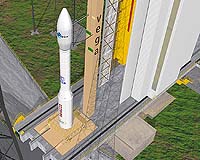
Kourou, French Guiana (ESA) Nov 05, 2004 The construction site for the ground segment of Vega, the small European launcher, was opened at Europe's Spaceport in Kourou, French Guiana last month. Vega is due to be launched at the end 2007 and will complement the European mid-class Soyuz and heavy-class Ariane 5 launchers. The site was formally inaugurated on 20 October by ESA together with CNES and Italian company Vitrociset, prime contractor for the ground segment. This is the start of a new life for ELA1, the launch pad originally used for the Ariane 1 European launcher, 15 years after its deactivation. The new launch pad (ZLV - Zone de Lancement Vega) is being built on the ELA1 foundations. The choice of the Kourou Spaceport to build the new Vega ground segment infrastructure meets one of the main requirements of the Vega programme; namely to provide a high-quality launch service whilst limiting the cost by re-use of existing facilities and expertise. Activities will start with the fencing of the area, the partial renovation of the bunker and waterproofing, metallic fixture installation, removal of the old ELA1 launch table, the installation of the 'evacuation chamber', set up of telecommunications network, as well as the refurbishment of the building that will be used for temporary lodging of personnel. Prime contractor Vitrociset and its subcontractors will work with the support of local contractors, guaranteeing additional work for Europe's Spaceport and the companies involved. The site is due for completion in April 2007, in time for Vega's qualification flight at the end of 2007. During the exploitation phase, from 2008, the Vega Launch Service will be then operated by Arianespace.
More about Vega's ground segment infrastructure The Vega launch zone (ZLV), located on the old ELA1 site, comprises a permanent infrastructure (the bunker) and a mobile building (the gantry). The bunker includes:
The gantry, which is rolled back prior to the final countdown, provides composed of the infrastructure necessary for the integration of the Vega launcher, including:
The Launch Control Centre for Vega will be located in CDL3 (the control centre built for Ariane 5) which allows independent operational and monitoring systems dedicated to Vega, as shared components with Ariane. Vega will also benefit from shared use of the general facilities of the European Spaceport such as the satellite preparation area, Jupiter control centre for coordinating launch operations and facilities, storage sites, technical support services (transport, flight phase tracking, flight data processing for post-flight analysis, and meteorological data).
Evolution of the launch pad Almost thirty years have passed since the initial launch pad built in the late 60s for the Europa 2 launcher was modified into ELA1 to meet the requirements of the first Arianes. Since then, two other ESA-funded launch pads, ELA2 and ELA3, have been built to support the later Ariane launchers. launchers. Today, only ELA3 - dedicated to Ariane 5 - remains in use.
Email This Article Comment On This Article Related Links VEGA VEGA animation SpaceDaily Search SpaceDaily Subscribe To SpaceDaily Express Launch Pad at Space-Travel.com
 Soyuz To Launch Radarsat-2
 Evry, France (SPX) Jan 11, 2006
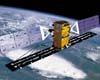
Starsem announced Monday the signing of a contract with MacDonald, Dettwiler and Associates (MDA) for the launch of MDA's RADARSAT-2 Earth observation satellite by a Soyuz launch vehicle. |
|
|

| The content herein, unless otherwise known to be public domain, are Copyright 1995-2006 - SpaceDaily.AFP and UPI Wire Stories are copyright Agence France-Presse and United Press International. ESA PortalReports are copyright European Space Agency. All NASA sourced material is public domain. Additionalcopyrights may apply in whole or part to other bona fide parties. Advertising does not imply endorsement,agreement or approval of any opinions, statements or information provided by SpaceDaily on any Web page published or hosted by SpaceDaily. Privacy Statement |