|
 |
 |
 |
 |
 |
 |
 |
 |

 |
Top 10 Materials Moments In History Announced
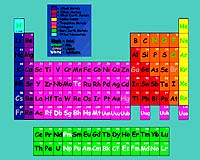
Warrendale PA (SPX) Mar 09, 2007 More than 4,200 materials science and engineering professionals from 68 countries attended the TMS 2007 Annual Meeting and Exhibition in Orlando, Florida, Feb. 25-March 1, as the results of voting among the scientific community and the public at large revealed the Greatest Materials Moments in History. The Periodic Table of Elements devised by Dmitri Mendeleev in 1864 was voted the number one materials moment, the indispensable reference tool for those in the field. (See below for remaining top 10.) The record number of attendees, 4,253, at the 136th annual meeting, took part in 2,354 technical presentations in light metals; extraction, processing, structure and properties; and emerging materials; as well as the plenary sessions presenting the Greatest Materials Moments. Leaders in industry, academia and government spoke at the plenary sessions, recapping 50 years of technological progress in materials. In his presentation regarding the future of materials science, Dr. Diran Apelian, a professor and director at the Worcester Polytechnic Institute in Massachusetts, stated, "The driving force for R and D in the United States has been primarily provided by the Department of Defense...Defense is a critical societal need; however, it is not the only need and a balance is needed to ensure that basic human needs are being addressed." Those needs include energy, transportation, housing, food, recycling and health, according to Dr. Apelian. The needs of past generations were reflected in materials developed and are evidenced in the remaining top 10 moments: No. 2 Fe Smelting Around 3500 B.C., Egyptians smelt iron for the first time, using tiny amounts, mostly for ornamental or ceremonial purposes. This is the first processing secret of what will become the world's dominant metallurgical material. No. 3 Transistor In 1948, John Bardeen, Walter H. Brattain and William Shockley invent the transistor. This becomes the building block for all modern electronics and the foundation for microchip and computer technology. No. 4 Invention of Glass Approximately 2200 B.C., northwestern Iranians invent glass. This becomes the second greatest nonmetallic engineering material (following ceramics). No. 5 Optical Microscopy In 1668, Anton van Leeuwenhoek develops optical microscopy, capable of magnifications of 200 times and greater. This enables study of the natural world invisible to the human eye. No. 6 Modern Concrete In 1755, John Smeaton invents modern concrete (hydraulic cement), which introduces the dominant construction material of the modern age. No. 7 Crucible Steel Making Around 300 B.C., metal workers in south India develop crucible steel making, which produces "wootz" steel. This becomes famous as Damascus sword steel hundreds of years later, inspiring artisans, blacksmiths and metallurgists for many generations. No. 8 Cu Extraction and Casting Approximately 5000 B.C., people in the region of modern Turkey discover that liquid copper can be extracted from malachite and azurite, and that the molten metal can be cast into different shapes. Extractive metallurgy is introduced. No. 9 X-ray Diffraction In 1912, Max von Laue discovers the diffraction of x-rays by crystals. This creates the means to characterize crystal structures and inspires the development of the theory of diffraction by crystals. No. 10 Bessemer Process In 1856, Henry Bessemer patents a bottom-blown acid process for melting low-carbon iron. This leads to the era of cheap, large tonnage steel, enabling massive progress in transportation, building construction and general industrialization. Community Email This Article Comment On This Article Related Links TMS (The Minerals, Metals and Materials Society) Greatest Materials Moments Stellar Chemistry, The Universe And All Within It All about the technology of space and more Space Technology News - Applications and Research
 Austin Physicists Slow And Control Supersonic Helium Beam
 Austin TX (SPX) Mar 09, 2007
The speed of a beam of helium atoms can be controlled and slowed using an "atomic paddle" much as a tennis player uses a racquet to control tennis balls, physicists at The University of Texas at Austin have discovered. The slow helium beam technique-a breakthrough in the field of atom optics-could someday be used to better probe microscopic surfaces or create advanced navigation systems. |
|
|

| The content herein, unless otherwise known to be public domain, are Copyright 1995-2006 - SpaceDaily.AFP and UPI Wire Stories are copyright Agence France-Presse and United Press International. ESA PortalReports are copyright European Space Agency. All NASA sourced material is public domain. Additionalcopyrights may apply in whole or part to other bona fide parties. Advertising does not imply endorsement,agreement or approval of any opinions, statements or information provided by SpaceDaily on any Web page published or hosted by SpaceDaily. Privacy Statement |