|
 |
 |
 |
 |
 |
 |
 |
 |

 |
Austin Physicists Slow And Control Supersonic Helium Beam
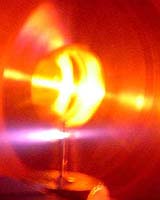
Austin TX (SPX) Mar 09, 2007 The speed of a beam of helium atoms can be controlled and slowed using an "atomic paddle" much as a tennis player uses a racquet to control tennis balls, physicists at The University of Texas at Austin have discovered. The slow helium beam technique-a breakthrough in the field of atom optics-could someday be used to better probe microscopic surfaces or create advanced navigation systems. "The slow beam is an enabling technology," said Dr. Mark Raizen, the Sid W. Richardson Foundation Regents Chair in Physics. "The next step is to do science with the beams." Raizen and his colleagues at the Center for Nonlinear Dynamics created the slow helium beams using a yard-long, rapidly spinning titanium blade tipped with silicon wafers that Raizen calls an atomic paddle. He and his colleagues pumped puffs of super-cooled helium gas into a vacuum chamber containing the paddle using supersonic beam technology developed by Professor Uzi Even of Tel-Aviv University. The paddle's silicon wafers reflected the helium atoms much like a glass mirror reflects a beam of light. Just as the energy of a tennis ball is absorbed by the motion of a tennis racquet, the motion of the paddle absorbed the energy from the helium beam. The beam was slowed to 560 miles per hour, less than one-eighth the normal velocity of helium. Raizen's slow beam work is important to understanding the interaction between an atom and a surface, a fundamental aspect of physics that has been investigated since the pioneering work of Otto Stern in 1930. Scientists can bounce atoms off a surface and observe the scattered atoms to learn about the properties of the atoms and the surface. To date, the main disadvantage of using helium to probe surfaces has been that it typically moves very quickly, nearly 4,500 miles per hour at room temperature. When helium hits a surface at a very high velocity, it tends to scatter in many directions, making it more difficult to observe the atoms after impact and limiting its practical use as a probe. Slow beams could someday be used in advanced navigation systems with gyroscopes, like those found in airplanes, submarines, space probes and the International Space Station. Gyroscopes allow an object to maintain its orientation or balance, even in outer space. A gyroscope system based on atoms would have a much higher sensitivity than gyroscope systems that use lasers, said Raizen. He said that the atomic paddle method could be used in the future to produce even slower helium atoms and ultimately to stop and trap them. Raizen's slow beam research was published March 7 online in Physical Review Letters, Volume 98, Number 10. Community Email This Article Comment On This Article Related Links University of Texas at Austin All about the technology of space and more Space Technology News - Applications and Research
 Northrop Grumman Wins Accolades For Space Deployables
 Carpenteria CA (SPX) Mar 08, 2007
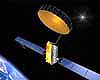
Northrop Grumman Astro Aerospace business unit has been recognized by NASA's Jet Propulsion Laboratory (JPL) and The Royal Aeronautical Society for its groundbreaking design and on-orbit performance of its deployable systems on two separate space programs. |
|
|

| The content herein, unless otherwise known to be public domain, are Copyright 1995-2006 - SpaceDaily.AFP and UPI Wire Stories are copyright Agence France-Presse and United Press International. ESA PortalReports are copyright European Space Agency. All NASA sourced material is public domain. Additionalcopyrights may apply in whole or part to other bona fide parties. Advertising does not imply endorsement,agreement or approval of any opinions, statements or information provided by SpaceDaily on any Web page published or hosted by SpaceDaily. Privacy Statement |