|
 |
 |
 |
 |
 |
 |
 |
 |

 |
Thompson Files: F-35 engine follies
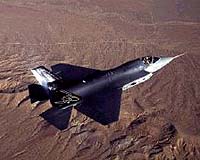
Arlington, Va. (UPI) Aug 21, 2007 The biggest program in the Pentagon's weapons budget is the F-35 Joint Strike Fighter, which will cost $338 billion -- a third of a trillion dollars -- to develop, manufacture and maintain. Current plans call for building 2,443 of the single-engine jets to replace the Cold War fighters and attack planes of the U.S. Air Force, Navy and Marine Corps. Thousands more may be bought by allies. Companies involved in building or supporting the F-35 can look forward to sizable revenues for decades to come. So of course, many companies are trying to get a piece of the action. One such company is General Electric, which has convinced Sen. Ted Kennedy, D-Mass., and other legislators to earmark hundreds of millions of dollars for developing an alternative to the F-35's primary engine. GE and its legislative backers say the alternate engine will save money, bolster safety and strengthen the industrial base across the lifetime of the program. Pentagon policymakers say there is no firm evidence to support those claims and want to forego funding of the new engine. Independent studies of the subject tend to side with the government in identifying few benefits to buying competing engines. A look at what those studies found suggests that ideas like promoting competition and strengthening the industrial base are being misused to the detriment of taxpayers. Benefits of competition. Competition is the driving force behind free markets, disciplining price and performance. Proponents of the alternate engine argue that awarding a monopoly for the F-35 engine to the Pratt & Whitney unit of United Technologies invites abuses. That conveniently ignores the fact that the engine has already been competed several times, and each time the Pratt & Whitney engine won. It also ignores the fact that since the government will be the sole customer for the alternate engine, it will need to pay all the costs of developing, producing and sustaining it. Four out of five independent assessments found that savings from competition across the lifetime of the program are unlikely to match or surpass the added cost of maintaining a second source. Safety and reliability. Proponents of an alternate engine argue that having two engines from which to choose will promote safety and reliability. In fact, it is likely to do the opposite by injecting greater complexity -- separate maintenance procedures, separate sets of spare parts -- into the sustainment of the aircraft. Furthermore, the engine Pratt & Whitney will provide for the F-35 is a derivative of the engine already being used on the twin-engine F-22 Raptor, whereas the engine GE will provide has never been used in an operational setting before. Past experience indicates that when new engines with no prior operational history are introduced into single-engine planes like the F-35, they have markedly inferior safety records compared with engines being introduced from other operational settings. Bolstering the industrial base. Backers of the alternate engine say that by purchasing competing aircraft engines, the Pentagon will bolster the industrial base. This appears to be an argument for subsidizing GE's aircraft engine unit, which is already the biggest in the world and does far more business with the U.S. Defense Department than competitors do. Kennedy uses the same rationale in justifying his earmark, saying it will create hundreds of jobs at the GE plant in his state. However, GE doesn't plan to build its engine in Massachusetts and has a 50-year record of closing manufacturing sites in the Northeast. It's a little hard to see how building redundant engines in uneconomical quantities at two different sites will benefit America's waning manufacturing base. (Loren B. Thompson is chief executive officer of the Lexington Institute, an Arlington, Va.-based think tank that supports democracy and the free market.) Community Email This Article Comment On This Article Related Links Aerospace News at SpaceMart.com
 Indonesia to buy six Sukhoi jets: Russia
 Zhukovsky, Russia (AFP) Aug 21, 2007
Indonesia is set to buy six Sukhoi fighter jets Tuesday, a representative from Russian weapons exporter Rosoboronexport said at an airshow outside Moscow. |
|
|

| The content herein, unless otherwise known to be public domain, are Copyright 1995-2007 - SpaceDaily.AFP and UPI Wire Stories are copyright Agence France-Presse and United Press International. ESA Portal Reports are copyright European Space Agency. All NASA sourced material is public domain. Additional copyrights may apply in whole or part to other bona fide parties. Advertising does not imply endorsement,agreement or approval of any opinions, statements or information provided by SpaceDaily on any Web page published or hosted by SpaceDaily. Privacy Statement |