|
 |
 |
 |
 |
 |
 |
 |
 |

 |
Spit Test For Lung Cancer
UPI Senior Science Writer Washington CA (SPX) Jan 25, 2007 Researchers say they are developing a simple spit test to help diagnose early-stage lung cancer in current and former smokers. Reporting In The Journal Clinical Cancer Research (UPI) the scientists said the gene probe would use the hereditary material deoxyribonucleic acid, or DNA, coughed up with phlegm to detect the potentially fatal malignancy. The team reported that its inexpensive test, which checks whether two tumor-suppressing genes are missing in sputum cells, identified 76 percent of stage I lung cancer patients, compared to 47 percent identified through current sputum "cytology" tests that seek changes in cell structure. The next step is to expand the test to screen for up to eight genes, the scientists said. The trick is to find genes that specifically indicate cancer rather than cellular damage that occurs from smoking but does not necessarily portend malignancy, they said. "There is an urgent need to develop reliable early diagnostic biomarkers for lung cancer that can be detected non-invasively, and these two genes look to be great candidate markers for such a test," said study investigator Dr. Feng Jiang, assistant professor of pathology at the University of Maryland School of Medicine in Baltimore. "We need to validate our findings, of course, but we have shown that the genetic aberrations seen in sputum reflect the same genetic aberrations found in lung tumors and that these molecular changes occur before any morphological changes can be seen in a cytology test."
Source: United Press International Community Email This Article Comment On This Article Related Links Hospital and Medical News at InternDaily.com Hospital and Medical News at InternDaily.com
 New Method Holds Promise For Treating Brain Injuries
 New York, NY (SPX) Jan 19, 2007
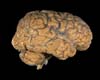
An injury to the brain can be devastating. When brain cells die, whether from head trauma, stroke or disease, a substance called glutamate floods the surrounding areas, overloading the cells in its path and setting off a chain reaction that damages whole swathes of tissue. Glutamate is always present in the brain, where it carries nerve impulses across the gaps between cells. But when this chemical is released by damaged or dying brain cells, the result is a flood that overexcites nearby cells and kills them. |
|
|

| The content herein, unless otherwise known to be public domain, are Copyright 1995-2006 - SpaceDaily.AFP and UPI Wire Stories are copyright Agence France-Presse and United Press International. ESA PortalReports are copyright European Space Agency. All NASA sourced material is public domain. Additionalcopyrights may apply in whole or part to other bona fide parties. Advertising does not imply endorsement,agreement or approval of any opinions, statements or information provided by SpaceDaily on any Web page published or hosted by SpaceDaily. Privacy Statement |