|
 |
 |
 |
 |
 |
 |
 |
 |

 |
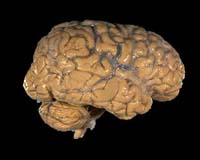
New Method Holds Promise For Treating Brain Injuries
New York, NY (SPX) Jan 19, 2007 An injury to the brain can be devastating. When brain cells die, whether from head trauma, stroke or disease, a substance called glutamate floods the surrounding areas, overloading the cells in its path and setting off a chain reaction that damages whole swathes of tissue. Glutamate is always present in the brain, where it carries nerve impulses across the gaps between cells. But when this chemical is released by damaged or dying brain cells, the result is a flood that overexcites nearby cells and kills them. A new method for ridding the brain of excess glutamate has been developed at the Weizmann Institute of Science. This method takes a completely new approach to the problem, compared with previous attempts based on drugs that must enter the brain to prevent the deleterious action of glutamate. Many drugs, however, can't cross the blood-brain barrier into the brain, while other promising treatments have proved ineffective in clinical trials. Prof. Vivian Teichberg, of the Institute's Neurobiology Department, working together with Prof. Yoram Shapira and Dr. Alexander Zlotnik of the Soroka Medical Center and Ben Gurion University of the Negev, has shown that in rats, an enzyme in the blood can be activated to "mop up" toxic glutamate spills in the brain and prevent much of the damage. This method may soon be entering clinical trials to see if it can do the same for humans. Though the brain has its own means of recycling glutamate, injury causes the system to malfunction, leading to glutamate build up. Prof. Teichberg reasoned that this problem could be circumvented by passing glutamate from the fluid surrounding brain cells into the bloodstream. But first, he had to have a clear understanding of the mechanism for moving glutamate from the brain to the blood. Glutamate concentrations are several times higher in the blood than in the brain, and the body must be able to pump the chemical "upstream." Glutamate pumps, called transporters, are found on the outsides of blood vessels, on cells that come into contact with the brain. These collect glutamate, creating small zones of high concentration from which the glutamate can then be released into the bloodstream. Basic chemistry told him that he could affect the transporter activity by tweaking glutamate levels in the blood. When blood levels are low, the greater difference in concentrations causes the brain to release more glutamate into the bloodstream. He uses an enzyme called GOT that is normally present in blood to bind glutamate chemically and inactivate it, effectively lowering levels in the blood and kicking transporter activity into high gear. In their experiments, Teichberg and his colleagues used this method to scavenge blood glutamate in rats with simulated traumatic brain injury. They found that glutamate cleared out of the animals' brains effectively, and damage was prevented. Yeda, the technology transfer arm of the Weizmann Institute, now holds a patent for this method, and a new company based on this patent, called "Braintact Ltd.," has been set up in Kiryat Shmona in northern Israel and is currently operating within the framework of Meytav Technological Incubator. The US FDA has assured the company of a fast track to approval. If all goes well, Phase I clinical trials are planned for the near future. The method could potentially be used to treat such acute brain insults as head traumas and stroke, and prevent brain and nerve damage from bacterial meningitis or nerve gas. It may also have an impact on chronic diseases such as glaucoma, amyotrophic lateral sclerosis (ALS) or HIV dementia. Teichberg: "Our method may work where others have failed, because rather than temporarily blocking the glutamate's toxic action with drugs inside the brain, it clears the chemical away from the brain into the blood, where it can't do harm anymore." Community Email This Article Comment On This Article Related Links Weizmann Institute of Science American Committee for the Weizmann Institute of Science Hospital and Medical News at InternDaily.com Hospital and Medical News at InternDaily.com
 Ingestible Thermometer Pill Helps Athletes Beat the Heat
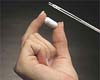 Baltimore MD (SPX) Jan 10, 2007
From the football turf to high above the Earth, heat exhaustion can be life-threatening. Now the same type of "thermometer pill" that astronaut John Glenn swallowed as part of space shuttle medical experiments is also helping athletes to beat the heat. Just as an engine overheats on a hot day, heat exhaustion -- or hyperthermia -- occurs when the body retains too much heat due to extreme environmental conditions or increased internal heat production. |
|
|

| The content herein, unless otherwise known to be public domain, are Copyright 1995-2006 - SpaceDaily.AFP and UPI Wire Stories are copyright Agence France-Presse and United Press International. ESA PortalReports are copyright European Space Agency. All NASA sourced material is public domain. Additionalcopyrights may apply in whole or part to other bona fide parties. Advertising does not imply endorsement,agreement or approval of any opinions, statements or information provided by SpaceDaily on any Web page published or hosted by SpaceDaily. Privacy Statement |