|
 |
 |
 |
 |
 |
 |
 |
 |

 |
Russia Halts Monitoring As Toxic Slick Dissolves In Amur
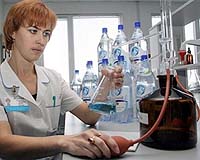
Vladivostok, Russia (AFP) Jan 25, 2006 Regional authorities in Russia's Far East Wednesday called a halt to daily monitoring of the Amur river's waters after tests registered no more of the toxic slick that flowed into Russia from China. "The Songhua toxic slick is fully dissolved in the Amur's waters and practically disappeared. Tests downriver show only minimal traces of nitrobenzene, and so we decided it unpractical to continue maintaining large-scale control," the Far East water and weather agency chief Alexander Gavrilov said. However, experts warned that benzene and nitrobenzene could have sunk to the river bottom and frozen into ice and would cause a fresh influx in spring, a concern that would set Russian scientists to monitor ice, river bottom and fish as early as February. One hundred tonnes of the carcinogens benzene and nitrobenzene were released into the Songhua after an explosion in November 13 at a PetroChina chemical factory in the northeastern province of Jilin. The spill caused an 80-kilometer-long (50-mile-long) toxic slick to flow down the Songhua, the source of water for millions including the residents of Harbin city, who had their water supplies cut off for days.
Source: Agence France-Presse Community Email This Article Comment On This Article Related Links Our Polluted World and Cleaning It Up
 Clean Up Launched At One Of Czech Republic Most Dangerous Pollution Blackspots
 Prague (AFP) Jan 24, 2006
A special decontamination unit will start operation Tuesday at one of the Czech Republic's most notorious and dangerous pollution blackspots, the dioxin contaminated Spolana factory on the River Elbe around 20 kilometres (13 miles) north of Prague. |
|
|

| The content herein, unless otherwise known to be public domain, are Copyright 1995-2006 - SpaceDaily.AFP and UPI Wire Stories are copyright Agence France-Presse and United Press International. ESA PortalReports are copyright European Space Agency. All NASA sourced material is public domain. Additionalcopyrights may apply in whole or part to other bona fide parties. Advertising does not imply endorsement,agreement or approval of any opinions, statements or information provided by SpaceDaily on any Web page published or hosted by SpaceDaily. Privacy Statement |