|
 |
 |
 |
 |
 |
 |
 |
 |

 |
Researchers Produce Insulation with Lowest Thermal Conductivity Ever
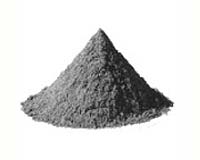
Seattle WA (SPX) Dec 29, 2006 A new insulation material with the lowest thermal conductivity ever measured for a fully dense solid has been created at the University of Oregon and tested by researchers at three other U.S. institutions. While far from having immediate application, the principles involved, once understood, could lead to improved insulation for a wide variety of uses, the scientists say. In a paper published online Dec. 14 on Science Express, in advance of regular publication in the journal Science, the scientists describe how they used a novel approach to synthesize various thicknesses of tungsten diselenide. This effort resulted in a random stacking of tungsten-diselenide planes (WSe2), possibly leading to a localization of lattice vibrations. The resulting synthesized material, they report, resulted in thermal conductivity - the rate at which heat flows through a material - 30 times smaller than that for single-crystal WSe2 and a factor six smaller that the minimum level predicted by theoretical computations for the cross-plane thin films used in the experiments. Surprisingly, creating a fully disordered structure by bombarding the films with ions to destroy the order in the two-dimensional planes actually increases thermal conductivity, said David C. Johnson, a professor of chemistry at the University of Oregon and member of the UO Materials Science Institute. "The reason for the extraordinarily low thermal conductivity that we've now achieved is an unusual structure which is crystalline in two directions but has a subtle rotational disorder in the direction of low-heat conduction," Johnson said. The material prepared in Johnson's lab "is the closest thing that anyone has found to making a dense solid into a perfect thermal insulator," said co-author and corresponding investigator David G. Cahill, a professor of materials science and engineering at the University of Illinois at Urbana-Champaign. "This material would not be practical for insulating a refrigerator, the wall of a house or parts inside a turbine engine, but the new physical properties displayed by this material might some day point the way toward methods of creating more effective practical insulations." The approach is a new alternative to one described by Cahill and others in separate journals in the last two years in which researchers reduced minimum thermal conductivity by manipulating thin films of metals and oxides by adjusting interfaces of the materials by only a few nanometers. "Thermal conductivity is an important property in both conserving energy and in converting between forms of energy," Johnson said. "Obtaining low thermal conductivity in a thermoelectric material, which converts temperature gradients into electrical energy, increases efficiency." The properties of Johnson's material were measured in Cahill's Illinois laboratory. The structure was analyzed at the Argonne National Laboratory in Argonne, Ill. Computational simulations and molecular modeling of the layered crystals was carried out by researchers at Rensselaer Polytechnic Institute (RPI) in Troy, N.Y. Co-authors Pawel Keblinski and Arun Bodapati, both at RRI, said that the observed ultra-low thermal conductivity is not limited to tungsten diselenide and likely could be applied to a wide variety of disordered layered crystals. Other co-authors were Catalin Chiritescu, a student in Cahill's lab at the University of Illinois, Ngoc Nguyen, a doctoral student in Johnson's UO lab, and Paul Zschack of Argonne National Laboratory's Advanced Photon Source. Johnson also is the founder of the Center for Advance Materials Characterization in Oregon (CAMCOR) and the co-director of research at the Oregon Nanoscience and Microtechnologies Institute. ONAMI is an Oregon Signature Research Center made up of collaborating researchers from the UO, Oregon State University, Portland State University and the Pacific Northwest National Laboratory who pursue fundamental and applied research projects with industry in the Northwest. Community Email This Article Comment On This Article Related Links Johnson Page Cahill Page Space Technology News - Applications and Research
 NASA Grant To Help Further Develop New Welding Technology
 Troy MN (SPX) Dec 29, 2006
After receiving encouraging results, the National Aeronautics and Space Administration (NASA) and the Michigan Research Institute (MRI) will grant Delphi Corporation an additional $950,000 to help fund the continuing development of Deformation Resistance Welding (DRW). The first two grants for DRW, totaling $2.17 million, were used to perfect existing welding techniques, to create new ones, and to find new innovative ways to use DRW on suspension sub-frames. |
|
|

| The content herein, unless otherwise known to be public domain, are Copyright 1995-2006 - SpaceDaily.AFP and UPI Wire Stories are copyright Agence France-Presse and United Press International. ESA PortalReports are copyright European Space Agency. All NASA sourced material is public domain. Additionalcopyrights may apply in whole or part to other bona fide parties. Advertising does not imply endorsement,agreement or approval of any opinions, statements or information provided by SpaceDaily on any Web page published or hosted by SpaceDaily. Privacy Statement |