|
 |
 |
 |
 |
 |
 |
 |
 |

 |
NASA Grant To Help Further Develop New Welding Technology
Troy MN (SPX) Dec 29, 2006 After receiving encouraging results, the National Aeronautics and Space Administration (NASA) and the Michigan Research Institute (MRI) will grant Delphi Corporation an additional $950,000 to help fund the continuing development of Deformation Resistance Welding (DRW). The first two grants for DRW, totaling $2.17 million, were used to perfect existing welding techniques, to create new ones, and to find new innovative ways to use DRW on suspension sub-frames. The new grant will fund work done by Delphi in cooperation with the Edison Welding Institute (EWI) and SpaceForm, Inc., (SFI), a company formed in 2005 based on DRW technology. Planned projects will develop the technology in the area of ferrous and non-ferrous materials, dissimilar material joints, lean tubular structures and concepts for future manufacturing cells. "We're very pleased to have NASA's continued support of this program," said Timothy Forbes, director, commercialization and licensing, Delphi Technologies, Inc. "This continued commitment to DRW for a third phase of projects will allow us to make even more progress for the future of this technology." Delphi's DRW process, developed with funding from NASA's Space Exploration program with its goals to return to the moon and eventually Mars, can deliver reliable, repeatable, leak-free welds at significantly lower cost than conventional welding solutions. Its uniqueness comes from its ability to weld similar and dissimilar materials and shapes. NASA plans to use what is learned from Delphi's work with DRW as part of its Space Power Development Programs. Of specific interest is advanced welding of dissimilar metal joints for integrating titanium based cooling loops with power conversion systems utilizing stainless steel structures. According to researchers, titanium cooling loops offer higher levels of chemical compatibility, along with greater temperature and structural capability than aluminum tubing. This is of particular interest because traditional mechanical joining provides insufficient hermeticity for long life missions. In addition, the DRW technology is beneficial to all areas of manufacturing including: load-bearing structural applications, mobile medical products, automobiles, bicycles, motorcycles, commercial and recreational vehicles because of its ability to handle tube-to-tube and tube-to-sheet welding. "This latest grant from NASA will allow Delphi to work with EWI and SpaceForm to expand the capabilities of DRW," said Jayson Pankin, new venture creation specialist, Delphi. "Delphi will be in a stronger position to provide innovative joining and structural solutions to a broader set of customers." This Delphi project, funded by the latest NASA grant, is expected to be completed by the end of 2007. Community Email This Article Comment On This Article Related Links Delphi SpaceForm, Inc All about the technology of space and more Space Technology News - Applications and Research
 KIKU No 8 Deploys Large Deploy Antenna Reflectors
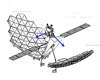 Tokyo, Japan (SPX) Dec 27, 2006
The Japan Aerospace Exploration Agency (JAXA) performed the remaining deployment operations for the large deployable antenna reflectors (LDR) onboard the Engineering Test Satellite VIII "KIKU No. 8" between 6:56 p.m. and 8:10 p.m. on December 26, 2006 (Japan Standard Time, JST) by sending commands from the Okinawa station. These included the release of the lower holding mechanism and the deployment of the reflectors for the sending antenna that were suspended. |
|
|

| The content herein, unless otherwise known to be public domain, are Copyright 1995-2006 - SpaceDaily.AFP and UPI Wire Stories are copyright Agence France-Presse and United Press International. ESA PortalReports are copyright European Space Agency. All NASA sourced material is public domain. Additionalcopyrights may apply in whole or part to other bona fide parties. Advertising does not imply endorsement,agreement or approval of any opinions, statements or information provided by SpaceDaily on any Web page published or hosted by SpaceDaily. Privacy Statement |