|
 |
 |
 |
 |
 |
 |
 |
 |

 |
Research Office Helps Excite Oxygen to Make Laser
Arlington VA (AFNS) Jul 05, 2006 A team of researchers supported by the Air Force Office of Scientific Research has made a breakthrough in Electric Oxygen Iodine Laser research. The results were recently presented at the Air Force Office of Scientific Research Molecular Dynamics Program Review, held June 5-8, in Arlington. Wayne C. Solomon, Aerospace Engineering professor emeritus, University of Illinois - Urbana Champaign, Urbana, Ill., is one of the principal investigators on the research team that made the breakthrough. The team's work is currently supported by Air Force Office of Scientific Research through the High Energy Laser Multidisciplinary Research Initiative, funded by the Joint Technology Office. Solomon's team is working on high-energy, electric oxygen-iodine hybrid lasers. Other research institutions involved in this research initiative include Emory University, Iowa State University, the Air Force Institute of Technology (AFIT), and three private companies. Potentially, this technology could have a large impact on Air Force systems, particularly the airborne laser program, in addition to some other tactical uses of lasers. During the poster session of the conference, Solomon discussed the challenges and successes of his research. "We have been looking at a problem that has been bugging the scientific community for about 30 years and decided a few years ago that we would try to solve it," Solomon said. "It is a way to take oxygen, just plain oxygen, out of a discharge unit." "You are basically discharging something like air," he noted. "We converted that to an excited species; basically excited oxygen." "We then took that energy and preserved it so that we could transfer it to an atomic iodine species," Solomon further explained. "Then, we put mirrors on it and made the laser." While Solomon's description might sound very simple, other researchers have tried it and it didn't turn out to be quite so easy, Solomon said. Yet his team has devised a way to rise to the challenge. "We are now in the process of trying to look at the details of the chemistry of the plasma and to try to improve it in such a way that it will essentially be a much more efficient high-energy laser than the types flying on airplanes today," Solomon said. He predicts this basic research technology will transition in a couple of years. "The small companies are working on the technology transition while the universities are plugging away to try to fill in all the interesting research gaps," Solomon emphasized. Oxygen plasmas have a variety of potential applications to Air Force technology and particularly lasers. Solomon's research is mostly directed towards understanding specific oxygen-iodine plasmas and how they can be applied to high-energy systems for the Air Force. More than 90 researchers and scientists attended the Air Force Office of Scientific Research 2006 Contractors' Meeting in Molecular Dynamics. Organizations in attendance of the meeting included the National Science Foundation and the Office of Naval Research, Arlington, Va.; the Air Force Research Laboratory, Wright-Patterson Air Force Base, Ohio; and BioTools Inc. Dozens of researchers from universities worldwide included the Universit�t G�ttingen, Germany, and the University of Sao Paulo, Sao Paulo, Brazil. Community Email This Article Comment On This Article Related Links Air Force Office of Scientific Research Space Technology News - Applications and Research
 Falcon Supercomputer To Solve Problems
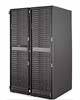 Wright-Patterson AFB OH (AFNS) Jul 04, 2006
The newest supercomputer at the Aeronautical Systems Center's Major Shared Resource Center went into production recently, enabling advanced problem-solving capabilities for mission-critical support to the Department of Defense. |
|
|

| The content herein, unless otherwise known to be public domain, are Copyright 1995-2006 - SpaceDaily.AFP and UPI Wire Stories are copyright Agence France-Presse and United Press International. ESA PortalReports are copyright European Space Agency. All NASA sourced material is public domain. Additionalcopyrights may apply in whole or part to other bona fide parties. Advertising does not imply endorsement,agreement or approval of any opinions, statements or information provided by SpaceDaily on any Web page published or hosted by SpaceDaily. Privacy Statement |