|
 |
 |
 |
 |
 |
 |
 |
 |

 |
Falcon Supercomputer To Solve Problems
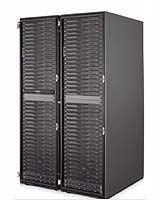
Wright-Patterson AFB OH (AFNS) Jul 04, 2006 The newest supercomputer at the Aeronautical Systems Center's Major Shared Resource Center went into production recently, enabling advanced problem-solving capabilities for mission-critical support to the Department of Defense. The new Falcon system will aid the center in providing greater computer resources to the Defense Department research and development and test and evaluation communities. Aeronautical Systems Center's Major Shared Resource Center is one of four such High-Performance Computing centers throughout the Defense Department. The Falcon system consists of 2,048 processors or 1,024 XC nodes with 2 (2.8 GHz) AMD Opteron central processing units. Falcon expands the center's capability to more than 6,900 processors spread across 11 systems. TOP500 list ranking for this system is anticipated to be announced following this week's (June 27 � 30) International Supercomputer Conference in Dresden, Germany, at www.top500.org. After system delivery, the center's staff worked closely with Hewlett-Packard, the developers of the Falcon, to prepare the machine for the first phase of Effectiveness Level Testing. This period tests the reliability of the system to assure a smooth transition into the High-Performance Computing environment. After successful completion of the first testing phase in mid-May, approximately 30 "Pioneer" users were given time on the system for the second phase of Effectiveness Level Testing. This phase helped to integrate the Falcon fully into the High-Performance Computing environment and address compatibility and configuration issues. The Falcon Pioneer program completed with full acceptance of the system on June 15. The Falcon went into full production June 21. "Several of our Pioneer users had positive comments about their experiences while running jobs on the Falcon," said Steve Wourms, director of the Aeronautical Systems Center's Major Shared Resource Center. "Pioneer users reported their delight with the Falcon as a well-balanced, high-speed system that will become a major �work horse' for them with good input/output, good communications, and good compute power," he emphasized. The Hewlett-Packard Cluster Portfolio, XC System Software and Scalable File Share are part of Hewlett-Packard's Unified Cluster Portfolio, which helps customers manage and visualize large volumes of data. The 11.5 TeraFLOPS system has a high-speed Voltaire InfiniBand interconnect that is used with Hewlett-Packard's XC system software providing cluster-management capability. "This is the first large-scale Linux cluster that the Aeronautical Systems Center's Major Shared Resource Center has ever integrated," Wourms said. "We look forward to this system helping to accelerate research that will provide mission-critical support for our user community." Community Email This Article Comment On This Article Related Links - Space Technology News - Applications and Research
 First Teraflop Class Supercomputer Decommissioned After 10 Years Service
 Albuquerque (UPI) Jul 03, 2006
The world's first teraflop computer has been decommissioned by the U.S. government despite still being among the world's 500 fastest supercomputers. Although young in age, the historic supercomputer -- based at the Sandia National Laboratories in Albuquerque, N.M., and known as ASCI Red -- is very old by supercomputer standards. |
|
|

| The content herein, unless otherwise known to be public domain, are Copyright 1995-2006 - SpaceDaily.AFP and UPI Wire Stories are copyright Agence France-Presse and United Press International. ESA PortalReports are copyright European Space Agency. All NASA sourced material is public domain. Additionalcopyrights may apply in whole or part to other bona fide parties. Advertising does not imply endorsement,agreement or approval of any opinions, statements or information provided by SpaceDaily on any Web page published or hosted by SpaceDaily. Privacy Statement |