|
 |
 |
 |
 |
 |
 |
 |
 |

 |
Raytheon Delivers 3000th Joint Standoff Weapon To The US Navy
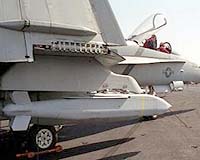
Tucson AZ (SPX) Nov 12, 2007 Raytheon Company has delivered its 3,000th Joint Standoff Weapon to the U.S. Navy. JSOW is a family of affordable, precision-guided, air-to-ground glide weapons capable of striking targets in sensitive and well-defended areas. More than 400 JSOWs have been used in combat operations, including Operation Iraqi Freedom. "JSOW's battle-proven capability provides us with an unbeatable combination of affordability, lethality, survivability and standoff range," said Captain Mat Winter, the Navy's JSOW program manager. "The delivery of the 3,000th JSOW is a noteworthy accomplishment for this critical air-to-ground system because it demonstrates our trust in the reliability of the product." JSOW contains next-generation technology that allows stealth engagement of high-value targets in heavily defended areas. Like its predecessors, the 3,000th JSOW has a modular design, allowing the weapon to deliver a variety of payloads. "This milestone demonstrates that JSOW's design modularity gives the warfighter flexibility and versatility," said John O'Brien, Raytheon program director for JSOW. "JSOW meets the commander's needs today and well into the future." Community Email This Article Comment On This Article Related Links Raytheon Learn about missile defense at SpaceWar.com All about missiles at SpaceWar.com
 Raytheon Standard Missile-3 Achieves Dual Intercepts In Space
 Kauai HI (SPX) Nov 08, 2007
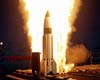
In a first-of-its-kind dual missile defense test, two Raytheon-built Standard Missile-3s, fired from a U.S. Navy ship, simultaneously intercepted and destroyed two short-range ballistic missile targets in space, Nov. 6. This was the first time a Navy ship demonstrated simultaneous engagements against ballistic missile targets outside the earth's atmosphere. These were the 10th and 11th successful intercepts for the Aegis Ballistic Missile Defense weapon system's SM-3. |
|
|

| The content herein, unless otherwise known to be public domain, are Copyright 1995-2007 - SpaceDaily.AFP and UPI Wire Stories are copyright Agence France-Presse and United Press International. ESA Portal Reports are copyright European Space Agency. All NASA sourced material is public domain. Additional copyrights may apply in whole or part to other bona fide parties. Advertising does not imply endorsement,agreement or approval of any opinions, statements or information provided by SpaceDaily on any Web page published or hosted by SpaceDaily. Privacy Statement |