
 |
 |
 |
 |
 |
 |
 |
 |
 |

 |
Preliminary Design Review Of New B-2 Bomber Computer Architecture Completed
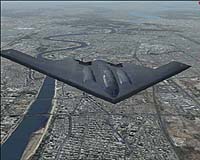
Palmdale CA (SPX) Jul 08, 2008 The U.S. Air Force and Northrop Grumman Corporation (NYSE:NOC) have successfully completed an incremental system design review of the new software and computing architecture that will manage B-2 stealth bomber missions for the next several decades. Northrop Grumman is the Air Force's prime contractor for the B-2, the flagship of the nation's long range strike arsenal. The new architecture defines standardized hardware and software interfaces that will allow the B-2's new integrated processing unit (IPU) to communicate, via a fiber network, with the aircraft's processing applications, both now and future. It provides the high-speed data handling environment required to implement future B-2 capabilities such as an EHF satellite communications system, and the ability to destroy moving targets. "By defining the requirements and design for the entire B-2 architecture up front, we will significantly reduce the time, effort and cost associated with developing and integrating new capabilities on the jet," explained Ron Naylor, director of the B-2 EHF and Computer Upgrade program for Northrop Grumman's Integrated Systems sector. "Under this new, system-level approach, most applications will effectively 'plug in' to the IPU. Our main task will be to develop, integrate and test software unique to each application." The two-day technical review of the new architecture, which was completed on June 5, included representatives of the Air Force, Northrop Grumman and other members of the B-2 industry team. It was performed in Oklahoma City, Okla., as part of a $171 million contract awarded to Northrop Grumman by the Air Force in June 2007 to develop the first increment of a new EHF satellite communications system. Lockheed Martin Systems Integration, Owego, N.Y., is developing the IPU under contract to Northrop Grumman. The processor is designed to replace up to a dozen current stand-alone avionics computers on the B-2. The new architecture also includes a new disk drive unit developed by Honeywell Defense and Space. According to Naylor, Northrop Grumman's work on the EHF and computer upgrade contract also includes replacing the B-2's current flight management (FM) computer -- the aircraft's "brain" -- with a smaller, faster single-board processor; and installing a new version of the FM's operational flight program (OFP) software on that processor. The new FM processor card will be installed in one of many computer slots in the modular IPU. The task of re-hosting the FM OFP software on the new processor takes advantage of a previous Northrop Grumman-funded initiative that developed a cost-effective way to translate software written in an older computer language called JOVIAL to a newer, more modern programming language called C. The Air Force is currently using the company's software methodologies to translate OFP software used to manage other B-2 aircraft functions from JOVIAL into C. The B-2 Spirit stealth bomber is one of the most survivable aircraft in the world. It remains the only long-range, large-payload aircraft that can penetrate deeply into protected airspace. In concert with the Air Force's air superiority fleet, which provides airspace control, and the Air Force's tanker fleet, which enables global mobility, the B-2 helps ensure an effective U.S. response to threats anywhere in the world. It can fly more than 6,000 nautical miles unrefueled and more than 10,000 nautical miles with just one aerial refueling, giving it the ability to reach any point on the globe within hours. Community Email This Article Comment On This Article Share This Article With Planet Earth
Related Links The latest in Military Technology for the 21st century at SpaceWar.com
 Northrop Grumman Receives Contract For Airborne And Maritime Fixed Station JTRS Program
 San Diego CA (SPX) Jul 08, 2008
Northrop Grumman has received a 56-month contract from Lockheed Martin worth up to $240 million, if all options are exercised, to provide critical technologies for the Airborne and Maritime/Fixed Station (AMF) Joint Tactical Radio System (JTRS). |
|
|

| The content herein, unless otherwise known to be public domain, are Copyright 1995-2007 - SpaceDaily.AFP and UPI Wire Stories are copyright Agence France-Presse and United Press International. ESA Portal Reports are copyright European Space Agency. All NASA sourced material is public domain. Additional copyrights may apply in whole or part to other bona fide parties. Advertising does not imply endorsement,agreement or approval of any opinions, statements or information provided by SpaceDaily on any Web page published or hosted by SpaceDaily. Privacy Statement |
 del.icio.us
 Digg
Digg Reddit
 YahooMyWeb
 Google
 Facebook