
 |
 |
 |
 |
 |
 |
 |
 |
 |

 |
Phoenix Weathers Dust Storm
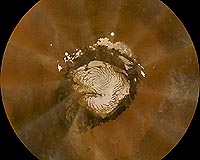
Pasadena CA (SPX) Oct 15, 2008 The Phoenix Lander over the weekend successfully weathered a regional dust storm that temporarily lowered its solar power, and the team is back investigating the Red Planet's northern plains. The increasing opacity in the atmosphere from the storm decreased the power reaching the Phoenix's solar arrays. So on Martian days, or sols, 135-136 of the mission (Oct. 11-12), Phoenix scientists and engineers curtailed many of the lander's science activities, such as collecting some data from its onboard science laboratories. The 37,000 square-kilometer storm (nearly 23,000 miles) moved west to east, and weakened considerably by the time it reached the lander on Saturday, Oct. 11. This tamer storm put the spacecraft in a better than expected situation, said Ray Arvidson of Washington University in St. Louis, the lead scientist for Phoenix's Robotic Arm. Now the lander is busy meting out its power to analyze soil samples, collect atmospheric data, and conduct other activities before fall and winter stop Phoenix cold. "Energy is becoming an issue, so we have to carefully budget our activities," Arvidson said. The Phoenix team tracked the dust storm last week through images gleaned from the Mars Reconnaissance Orbiter's Mars Color Imager. The imager's team estimated that after the dust storm passed through Phoenix's landing site on Saturday, the dust would gradually decrease this week. This dust storm is a harbinger of more wintry and volatile weather to come. As Martian late summer turns into fall, the Phoenix team anticipates more dust storms, frost in trenches, and water-ice clouds. They look forward to collecting data and documenting this "most interesting season," Arvidson said. Community Email This Article Comment On This Article Share This Article With Planet Earth
Related Links Phoenix at LPL Phoenix at NASA Mars News and Information at MarsDaily.com Lunar Dreams and more
 The Sun Is Setting On Phoenix
 Moffett Field CA (SPX) Oct 14, 2008
As fall approaches Mars' northern plains, NASA's Phoenix Lander continues to dig into the red planet's soil and deliver samples to its onboard science instruments for analysis. |
|
|

| The content herein, unless otherwise known to be public domain, are Copyright 1995-2007 - SpaceDaily.AFP and UPI Wire Stories are copyright Agence France-Presse and United Press International. ESA Portal Reports are copyright European Space Agency. All NASA sourced material is public domain. Additional copyrights may apply in whole or part to other bona fide parties. Advertising does not imply endorsement,agreement or approval of any opinions, statements or information provided by SpaceDaily on any Web page published or hosted by SpaceDaily. Privacy Statement |
 del.icio.us
 Digg
Digg Reddit
 YahooMyWeb
 Google
 Facebook