|
 |
 |
 |
 |
 |
 |
 |
 |

 |
Orbital Successfully Launches New Medium Range Target For MDA
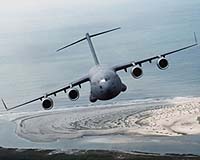
Dulles VA (SPX) Apr 13, 2005 Orbital Sciences announced Tuesday that it successfully launched a new Medium Range Target (MRT) vehicle for the U.S. Missile Defense Agency (MDA). The mission served as a risk reduction flight demonstration for the new target vehicle and collected critical data for a number of missile defense-related sensors that were activated for the test. The MRT vehicle is the first of a family of flexible targets being developed for MDA that can be launched conventionally from ground sites, air-launched from a U.S. Air Force C-17 cargo aircraft or sea-launched from the deck of a retired helicopter carrier. The risk reduction flight, which originated approximately 900 miles due west of Kauai, Hawaii, demonstrated the air-launch mode of operation from a C-17 aircraft. The target vehicle flew a ballistic trajectory and impacted the Pacific Ocean northwest of the Kauai Pacific Missile Range Facility (PMRF). "We are very pleased to have provided another successful target vehicle launch for our immediate customer at the Army's Space and Missile Defense Command and for the Missile Defense Agency," said Mr. Ron Grabe, Executive Vice President and General Manager of Orbital's Launch Systems Group. "The success of this mission was particularly important since it resulted in the delivery of the first flexible ballistic target vehicle that MDA can use for years to come." Orbital developed the MRT multiple launch mode target vehicle over a two-year period under a contract from the U.S. Army Space and Missile Defense Command (USASMDC). The specifications required a target vehicle that could support a broad range of ballistic trajectories and the integration of flexible hardware and software designs. These flexible configurations will allow MDA to select from a wide variety of mission parameters using a single target design with relatively short lead-time notification before mission execution. The MRT also integrates extensive booster and reentry system instrumentation and sensors to fully characterize the target vehicle's performance and provide post-mission verification data. Community Email This Article Comment On This Article Related Links Orbital SpaceDaily Search SpaceDaily Subscribe To SpaceDaily Express Launch Pad at Space-Travel.com
 Soyuz To Launch Radarsat-2
 Evry, France (SPX) Jan 11, 2006
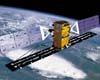
Starsem announced Monday the signing of a contract with MacDonald, Dettwiler and Associates (MDA) for the launch of MDA's RADARSAT-2 Earth observation satellite by a Soyuz launch vehicle. |
|
|

| The content herein, unless otherwise known to be public domain, are Copyright 1995-2006 - SpaceDaily.AFP and UPI Wire Stories are copyright Agence France-Presse and United Press International. ESA PortalReports are copyright European Space Agency. All NASA sourced material is public domain. Additionalcopyrights may apply in whole or part to other bona fide parties. Advertising does not imply endorsement,agreement or approval of any opinions, statements or information provided by SpaceDaily on any Web page published or hosted by SpaceDaily. Privacy Statement |