|
 |
 |
 |
 |
 |
 |
 |
 |

 |
Non-Coding RNAs Help Silence The Mammalian Transcription
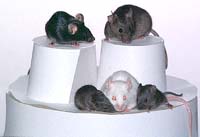
Cold Spring Harbor NY (SPX) May 15, 2006 Dr. Shirley Tilghman and colleagues (Princeton University) lend new insight into the mechanism of genomic imprinting, demonstrating a necessary role for a non-coding RNA transcript in the silencing of an imprinted gene cluster in mice. Imprinting, or the differential expression of a gene based upon which parent it has been inherited from, is integral to normal growth and development. Two human disorders, Prader-Willi and Angelman syndromes, result from the deletion of the identical portion of chromosome 15. Imprinting determines which disorder arises: When the deletion involves the chromosome 15 that came from the father, the child has Prader-Willi syndrome, but when the deletion involves the chromosome 15 that came from the mother, the child has Angelman syndrome. In the mouse, a cluster of nine genes on the distal end of the number 7 chromosome is imprinted. Dr. Tilghman and colleagues made a series of targeted alterations to ascertain which sequences are responsible for their paternal-specific silencing. The researchers show that this imprinted gene silencing requires the elongation of a paternally-expressed non-coding RNA transcript, Kcnq1ot1. "As we explore the mechanism of genomic imprinting in greater detail, it is becoming clear that there is not a single explanation for the silencing of all imprinted genes. Rather mammals have co-opted multiple transcriptional regulatory mechanisms that were already evolved. In the case of the Kcnqt1ot1, the mechanism utilizes some form of RNA silencing. The variation in silencing mechanisms lends further support to the argument that imprinting arose gradually over a long period in mammals, not all at once," explains Dr. Tilghman. Community Email This Article Comment On This Article Related Links Cold Spring Harbor Laboratory Darwin Today At TerraDaily.com
 How Did Cactuses Evolve
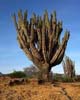 Chicago IL (SPX) May 15, 2006
In a groundbreaking new study in the June issue of American Naturalist, Erika J. Edwards (Yale University and University of California, Santa Barbara) and Michael J. Donoghue (Yale University) explore how leafy, "normal" plants evolved into the leafless succulent cactus. |
|
|

| The content herein, unless otherwise known to be public domain, are Copyright 1995-2006 - SpaceDaily.AFP and UPI Wire Stories are copyright Agence France-Presse and United Press International. ESA PortalReports are copyright European Space Agency. All NASA sourced material is public domain. Additionalcopyrights may apply in whole or part to other bona fide parties. Advertising does not imply endorsement,agreement or approval of any opinions, statements or information provided by SpaceDaily on any Web page published or hosted by SpaceDaily. Privacy Statement |