
 |
 |
 |
 |
 |
 |
 |
 |
 |

 |
New fighter jet hope for long-legged Dutch
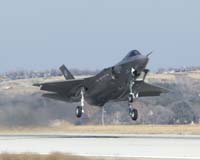
The Hague (AFP) Oct 28, 2008 Changes to the cockpit of a new fighter jet could offer hope to would-be pilots who are turned down for the Dutch air force because their legs are too long, an official said Tuesday. "We had a list of operational requirements, and one of these was that Dutch pilots should fit in the cockpits," air force spokeswoman Sascha Louwhoff told AFP referring to the new aircraft currently under development. "It may be funny, but it's true... Our pilots are obviously taller than Italian or Turkish pilots. Over the years, the Dutch people have grown taller, and we've had to keep up with that." To this end, producer Lockheed Martin has agreed to make changes to the cockpit of the Joint Strike Fighter which is being jointly developed by nine nations including the Netherlands, said Louwhoff. The fighter is one of three shortlisted to replace the Netherlands' ageing fleet of 85 F-16s. Currently, the Dutch air force is compelled to turn down aspirant pilots who are too tall in spite of their other qualifications, added Louwhoff. "There is a limit if you simply don't fit into the cockpit. Obviously this is not something we want to do, and we want to be able to choose from a bigger group," she said. Community Email This Article Comment On This Article Share This Article With Planet Earth
Related Links The latest in Military Technology for the 21st century at SpaceWar.com
 Lasers May Aid Missile Defense, Engine Crack Detection
 Arlington VA (AFNS) Oct 28, 2008
Air Force Office of Scientific Research-funded work at the University of Colorado at Boulder could lead to possible future technologies that use the high energy densities of lasers. Studies by university officials explore how atoms and molecules respond to light pulses, which could show cracks in high-performance engines. |
|
|

| The content herein, unless otherwise known to be public domain, are Copyright 1995-2007 - SpaceDaily.AFP and UPI Wire Stories are copyright Agence France-Presse and United Press International. ESA Portal Reports are copyright European Space Agency. All NASA sourced material is public domain. Additional copyrights may apply in whole or part to other bona fide parties. Advertising does not imply endorsement,agreement or approval of any opinions, statements or information provided by SpaceDaily on any Web page published or hosted by SpaceDaily. Privacy Statement |
 del.icio.us
 Digg
Digg Reddit
 YahooMyWeb
 Google
 Facebook