|
 |
 |
 |
 |
 |
 |
 |
 |

 |
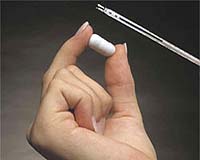
Ingestible Thermometer Pill Helps Athletes Beat the Heat
Baltimore MD (SPX) Jan 10, 2007 From the football turf to high above the Earth, heat exhaustion can be life-threatening. Now the same type of "thermometer pill" that astronaut John Glenn swallowed as part of space shuttle medical experiments is also helping athletes to beat the heat. Just as an engine overheats on a hot day, heat exhaustion -- or hyperthermia -- occurs when the body retains too much heat due to extreme environmental conditions or increased internal heat production. This is especially dangerous among football players. Athletes may train when the heat index is above 100 F, all while wearing heavy pads that not only retain heat, but also increase their body weight. Heat exhaustion can turn to heatstroke, causing the body's heat-regulating mechanisms to falter and fail. Ultimately this can lead to brain damage, organ damage, and eventually death. Heatstroke is the third leading cause of death among athletes in the United States. Astronauts working in space face a similar threat. During activities such as spacewalks, astronauts may perform strenuous activity that causes a rapid rise in body temperature. A space suit is insulated against external temperature extremes because the side facing the sun can heat to 250 F, and the side facing deep space can plunge to -250 F. The danger of overheating comes from within as astronauts release body heat and humidity inside the suits, potentially causing heat illnesses. To monitor astronaut body temperature during space flight, NASA teamed with Johns Hopkins University in the late 1980s to develop a thermometer pill called the Ingestible Thermal Monitoring System. The result was a 3/4-inch, silicone-coated capsule containing sensors, a microbattery, and a quartz crystal temperature sensor. Once the pill is swallowed, the quartz sensor vibrates at a frequency relative to the body's temperature, transmitting a harmless, low-frequency signal through the body. A recorder outside of the body can read this signal and display a core body temperature and other vital statistics. After 18 to 30 hours, the pill passes safely from the digestive system. In 1998, astronaut and U.S. Senator John Glenn swallowed a thermometer pill as part of his Space Shuttle Discovery medical experiments. NASA scientists tracked the data produced by the pill to study then 77-year-old Glenn's condition during his stay in space. Scientists hoped to better understand the physical deconditioning astronauts experience in the weightlessness of space. They also hoped to study how the rigors of space travel might mirror the human aging process on Earth. In 2001, the back-to-back deaths of both a professional and a college football player prompted athletic programs to investigate better ways to prevent heat-related illnesses. Enter the CorTemp� Ingestible Core Body Thermometer Pill, made for NASA and manufactured commercially by HQ, Inc. Since then, several professional and college teams have used the technology to help keep players safe from the heat. Other sports that have used the sensor pill include track and field, auto racing, soccer, hockey, and cycling. Within two hours of being swallowed, the thermometer pill transmits vital information that can be used to prevent and treat heat-related illnesses. Team personnel can noninvasively and wirelessly monitor the core body temperature of multiple athletes in real time. There are several options and configurations for tracking athletes, including the most simple method of holding a data recorder near the small of the back to read data from the thermometer inside of the body. Beyond the sporting world, the ingestible capsules have also been used to monitor the core body temperatures of firefighters and divers, two groups working in opposite temperature extremes. Doctors have utilized the technology to study sleep disorders and improve heart surgery techniques. The technology has also been used to monitor critical temperatures in paper manufacturing, food processing, and jumbo television sets found at sport stadiums Community Email This Article Comment On This Article Related Links Johns Hopkins University Hospital and Medical News at InternDaily.com Hospital and Medical News at InternDaily.com
 Anticancer Punch Confirmed For New Drug
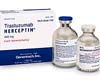 West Palm Beach (UPI) Jan 04, 2007
Doctors said Thursday new results from an ongoing study confirms that Herceptin (trastuzumab) prevents recurrence of breast cancer and improves survival in a specific group of women treated for the disease. "The survival benefit that has emerged over such a short period -- about three years -- emphasizes the potential of this approach and underlines the importance of developing further specific targeted therapies in breast and other cancers," said Ian Smith, professor of cancer medicine at the Royal Marsden Hospital, London. |
|
|

| The content herein, unless otherwise known to be public domain, are Copyright 1995-2006 - SpaceDaily.AFP and UPI Wire Stories are copyright Agence France-Presse and United Press International. ESA PortalReports are copyright European Space Agency. All NASA sourced material is public domain. Additionalcopyrights may apply in whole or part to other bona fide parties. Advertising does not imply endorsement,agreement or approval of any opinions, statements or information provided by SpaceDaily on any Web page published or hosted by SpaceDaily. Privacy Statement |