
 |
 |
 |
 |
 |
 |
 |
 |
 |

 |
New Evidence Of Battle Between Humans And Ancient Virus
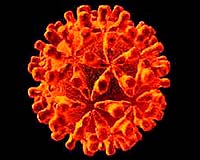
New York, NY (SPX) Jul 25, 2008 For millennia, humans and viruses have been locked in an evolutionary back-and-forth -- one changes to outsmart the other, prompting the second to change and outsmart the first. With retroviruses, which work by inserting themselves into their host's DNA, the evidence remains in our genes. Last year, researchers at Rockefeller University and the Aaron Diamond AIDS Research Center brought an ancient retrovirus back to life and showed it could reproduce and infect human cells. Now, the same scientists have looked at the human side of the story and found evidence that our ancestors fought back against that virus with a defense mechanism our bodies still use today. "This is the first time that we've been able to take an ancient retrovirus and analyze how it interacts with host defense mechanisms in the laboratory in the present day," says Paul Bieniasz, who is an associate professor and head of the Laboratory of Retrovirology at Rockefeller and a scientist at the Aaron Diamond AIDS Research Center. Bieniasz and graduate student Youngnam Lee took their resurrected virus, called HERV-K, tested its strength against molecules involved in human antiviral defense and published their results in the Journal of Virology (online ahead of print, June 18). Bieniasz, who also is an investigator at the Howard Hughes Medical Institute, and Lee found that, at least in the laboratory, human cells infected with HERV-K fought back with several antiviral proteins. One of those proteins, called APOBEC3G, leaves a tell-tale signature behind: It mutates virus DNA in a recognizable pattern and is one our cells use to attack modern retroviruses. "But this is the first time it's been shown for this ancient retrovirus," Bieniasz says. Once the scientists found that modern human cells attacked HERV-K with this molecule, they went back to look at the "fossil evidence," remnants of the virus that still remain in our genes and that the researchers had previously used to reconstruct it. What emerged were two copies of HERV-K that had clearly been mutated, and thus inactivated, by the APOBEC3G protein. "We're looking at things that happened millions and millions of years ago," says Lee. "But these sorts of ancient interactions may have influenced how humans are able to combat these retroviruses today. These proteins help protect us against current retroviruses." Indeed, HERV-K may well have helped to shape the modern APOBEC3G defense. The earlier study and this one provide two sides of the evolutionary coin: the infectious agent, and the host defense. "Retroviruses are able to infect us and leave remnants in our DNA, and our DNA also holds evidence of what we've done to them in return," Lee says. "It's an illustration of the fight between host and virus." Community Email This Article Comment On This Article Share This Article With Planet Earth
Related Links Rockefeller University Epidemics on Earth - Bird Flu, HIV/AIDS, Ebola
 Malaria Millennium Development Goal Unlikely To Be Met
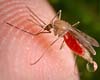 London, UK (SPX) Jul 24, 2008
The Millennium Development Goal (MDG) to halt and begin to reverse the incidence of malaria globally is unlikely to be met, according to Wellcome Trust Principal Research Fellow Professor Bob Snow. The statement comes in a report published in the open access journal PLoS Medicine. |
|
|

| The content herein, unless otherwise known to be public domain, are Copyright 1995-2007 - SpaceDaily.AFP and UPI Wire Stories are copyright Agence France-Presse and United Press International. ESA Portal Reports are copyright European Space Agency. All NASA sourced material is public domain. Additional copyrights may apply in whole or part to other bona fide parties. Advertising does not imply endorsement,agreement or approval of any opinions, statements or information provided by SpaceDaily on any Web page published or hosted by SpaceDaily. Privacy Statement |
 del.icio.us
 Digg
Digg Reddit
 YahooMyWeb
 Google
 Facebook