|
 |
 |
 |
 |
 |
 |
 |
 |

 |
New Zealand glaciers retreat due to global warming: scientists
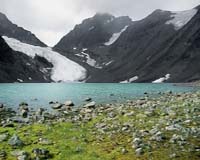
Wellington (AFP) Nov 19, 2007 New Zealand's largest glaciers are retreating fast in the face of global warming and could disappear altogether, scientists said Monday. A report by the National Institute of Water and Atmospheric Research (NIWA) said the volume of ice in New Zealand's Southern Alps had shrunk almost 11 percent in the past 30 years. More than 90 percent of this loss was because the 12 largest glaciers in the mountain range were melting due to rising temperatures, NIWA said. The glaciers have passed a threshold, causing the ice to collapse and creating large lakes at their base, the report said. "The 12 big glaciers with these pro-glacial lakes have passed a tipping point," said NIWA's principal scientist Jim Salinger. "It is not yet clear whether the glaciers will disappear completely with future warming, but they are set to shrink further as they adjust to today's climate," he said. "And it is already clear that they will not return to their earlier lengths without extraordinary cooling of the climate, because the large lakes now block their advance." Tasman Glacier, the longest in New Zealand, is now about 23 kilometres (14 miles) long. A five-kilometre lake has formed at its base in the past 30 years. In the 1880s, the glacier was 28 kilometres long. But increased rainfall -- which falls as snow and feeds the higher reaches of the glaciers -- on the western side of the Alps has meant the results for smaller glaciers on that side are mixed, NIWA said. These ice sheets advanced during most of the 1980s and 1990s amid periods of higher rainfall. But the best known of these, the Franz Josef glacier, is still much shorter than in 1900 and has retreated about 230 metres (yards) since 2000, despite gains in the past two years, Salinger said. Community Email This Article Comment On This Article Related Links Beyond the Ice Age
 Ice Age Imprint Found On Cod DNA
 Sheffield UK (SPX) Nov 19, 2007
An international team of researchers, led by the University of Sheffield, has demonstrated how Atlantic cod responded to past natural climate extremes. The new research could help in determining cods vulnerability to future global warming. With fishing pressures high and stock size low, there is already major concern over the current sustainability of cod and other fisheries. |
|
|

| The content herein, unless otherwise known to be public domain, are Copyright 1995-2007 - SpaceDaily.AFP and UPI Wire Stories are copyright Agence France-Presse and United Press International. ESA Portal Reports are copyright European Space Agency. All NASA sourced material is public domain. Additional copyrights may apply in whole or part to other bona fide parties. Advertising does not imply endorsement,agreement or approval of any opinions, statements or information provided by SpaceDaily on any Web page published or hosted by SpaceDaily. Privacy Statement |