|
 |
 |
 |
 |
 |
 |
 |
 |

 |
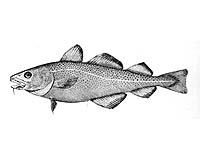
Ice Age Imprint Found On Cod DNA
Sheffield UK (SPX) Nov 19, 2007 An international team of researchers, led by the University of Sheffield, has demonstrated how Atlantic cod responded to past natural climate extremes. The new research could help in determining cods vulnerability to future global warming. With fishing pressures high and stock size low, there is already major concern over the current sustainability of cod and other fisheries. The new findings, published in the journal, Proceedings of the Royal Society B, show that natural climate change has previously reduced the range of cod to around a fifth of what it is today, but despite this, cod continued to populate both sides of the North Atlantic. The researchers used a computer model and DNA techniques to estimate where cod could be found in the ice age, when colder temperatures and lower sea-levels caused the extinction of some populations and the isolation of others. The computer models used to estimate ice-age habitats suitable for cod were developed by Professor Grant Bigg, Head of the University of Sheffield's Department of Geography. These climatic analyses were combined with genetic studies by US researchers at Duke University and the University of California, and ecological information prepared by colleagues at the University of East Anglia and the Institute of Marine Research in Norway. On land, plants and animals (including humans) are known to have moved further south when the northern ice sheets reached their maximum extent around 20,000 years ago. Similar migrations must have happened for plankton and fish in the sea. But there were two added complications: firstly, greatly reduced sea levels meant that many shallow and highly productive marine habitats around Europe and North America ceased to exist. Secondly, the ice-age circulation patterns in the North Atlantic caused the temperature change between tropical and polar conditions to occur over a much shorter north-south distance, reducing the area suitable for temperate species - such as cod. The new analyses included these effects, together with other environmental and ecological information, in order to estimate where it was possible for Atlantic cod to reproduce and survive. The results indicated that the ice-age range of Atlantic cod extended as far south as northern Spain, but the total area of suitable habitat was much more restricted. Nevertheless, populations of cod continued to exist on both sides of the North Atlantic. These findings were confirmed by genetic data, based on over a thousand DNA analyses of present-day cod populations, from Canada, Greenland, Iceland and around Europe. Professor Bigg said: "This research shows that cod populations have been able to survive in periods of extreme climatic change, demonstrating a considerable resilience. However this does not necessarily mean that cod will show the same resilience to the effects of future climatic changes due to global warming." Community Email This Article Comment On This Article Related Links University of Sheffield Beyond the Ice Age
 The Antarctic Free-For-All
 Moscow (RIA Novosti) Nov 12, 2007
Russia's 53rd Antarctic Expedition began in the small hours of November 6. The "Akademik Fyodorov" research vessel is sailing to the Antarctic in bad political weather that threatens to deteriorate into a geopolitical tornado. On October 17 the Guardian, a British newspaper, cited Foreign Office sources as saying that the U.K. government might lodge a legal claim with the UN's commission on the limits of the continental shelf "to extend sovereign territory into new areas." |
|
|

| The content herein, unless otherwise known to be public domain, are Copyright 1995-2007 - SpaceDaily.AFP and UPI Wire Stories are copyright Agence France-Presse and United Press International. ESA Portal Reports are copyright European Space Agency. All NASA sourced material is public domain. Additional copyrights may apply in whole or part to other bona fide parties. Advertising does not imply endorsement,agreement or approval of any opinions, statements or information provided by SpaceDaily on any Web page published or hosted by SpaceDaily. Privacy Statement |