|
 |
 |
 |
 |
 |
 |
 |
 |

 |
NASA Works With ISM To Commercialise Nanotube Technology
Boston MA (SPX) Nov 10, 2006 As researchers gather for the National Nano Engineering Conference in Boston November 9-10, they will have the opportunity to learn about how a NASA-developed innovative process is making a big impact in nanotechnology. Earlier this year, NASA's Goddard Space Flight Center in Greenbelt, Maryland-a sponsor of and exhibitor at the NASA Tech Briefs conference-licensed its patented technique for manufacturing high-quality single-walled carbon nanotubes (CNTs) to Idaho Space Materials (ISM) in Boise. Now the CNTs based on this process are being used by researchers and companies that are working on the next generation of composite polymers, metals, and ceramics that will impact almost every facet of life. One of the basic nanotechnology structures, a carbon nanotube is a graphite sheet one atomic layer thick of carbon that is wrapped on itself to create an extraordinarily long, thin, strong tube. Although CNTs were discovered 15 years ago, their use has been limited due to the complex, dangerous, and expensive methods for their production. However, Goddard researcher Dr. Jeannette Benavides developed a simpler, safer, and much less costly manufacturing process for single-walled CNTs. The key to the innovation developed by Dr. Benavides was the ability to produce bundles of CNTs without using a metal catalyst, dramatically reducing pre- and post-production costs while generating higher yields of better quality product. This capability was of particular interest to Wayne Whitt, who was looking for an innovation with which to start an advanced materials company. "Licensing NASA's technology allowed us to begin operations and rapidly commercialize an innovative product without the traditional R and D costs and time," said Mr. Whitt, who founded ISM. "We were able to focus on process enhancement and commercialization, which resulted in significant improvements in yield and production capacity without sacrificing product quality." Having successfully commercialized NASA's manufacturing process to increase production capacity while maintaining quality, ISM can produce single-walled CNTs at a rate of 50 grams per hour. These CNTs then can be used in a wide range of applications. "ISM believes that carbon nanotubes will be a building block for a better world, making people's lives better through a wide range of uses, including medical advances, fuel cells, video displays, solar cells, and a host of other applications," explained ISM vice president Roger Smith. "Getting single-walled CNTs into the hands of researchers will help accelerate their transition from a conceptual idea to a practical product, and that's why we offer our product at a reduced price for researchers." "I'm very excited to see that this agreement is now making CNTs more readily available, particularly for academic and other research programs," said Dr. Benavides, who demonstrated the technology to ISM and provided expertise during the company's commercialization of her technology. "The fact that they now have access to lower cost CNTs bodes well for the future of nanotechnology." This technology transfer success story was made possible by the efforts of NASA's Innovative Partnerships Program (IPP), which has a two-part focus: (1) forming partnerships between NASA and industry, academia, or other government agencies to support the space program and (2) transferring NASA technology to new applications. "NASA is committed to working with small businesses so they may be successful. It's good for technology, for NASA, and for the U.S. economy," said Nona Minnifield Cheeks, chief of IPP's office at Goddard. Community Email This Article Comment On This Article Related Links Nano Technology News From SpaceMart.com Nano Technology News From SpaceMart.com Computer Chip Architecture, Technology and Manufacture
 Nanodiamonds Help Replace Toxic Chromium Coatings
 Boca Raton FL (SPX) Nov 27, 2006
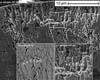
Drexel University and NanoBlox researchers have shown that the mechanical characteristics of electroless nickel-boride coatings deposited on steel can be significantly improved upon the addition of small amounts of nanosized diamond particles into deposition baths. |
|
|

| The content herein, unless otherwise known to be public domain, are Copyright 1995-2006 - SpaceDaily.AFP and UPI Wire Stories are copyright Agence France-Presse and United Press International. ESA PortalReports are copyright European Space Agency. All NASA sourced material is public domain. Additionalcopyrights may apply in whole or part to other bona fide parties. Advertising does not imply endorsement,agreement or approval of any opinions, statements or information provided by SpaceDaily on any Web page published or hosted by SpaceDaily. Privacy Statement |