|
 |
 |
 |
 |
 |
 |
 |
 |

 |
Marine Protected Areas Not Sufficient To Protect Global Biodiversity
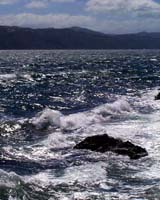
Auckland, New Zealand (SPX) Jun 25, 2006 Research undertaken at The University of Auckland, and published in the prestigious USA journal Science, shows that the protection of marine habitats is ineffectively managed worldwide to retain biodiversity, and that many so-called "Marine Protected Areas" are under threat from external sources. Only 2% of the world's tropical coral reefs are being safeguarded by Marine Protected Areas; places where some restriction is placed on human activities within the area. However, less than 0.01% of the world's coral reefs are protected from over-harvesting, poaching, siltation, nutrient enrichment and pollution. No global region currently protects more than 10% of its coral reefs adequately, with reefs in the Indo-Pacific and Caribbean remaining particularly vulnerable. New Zealand is world-leading in protecting marine life, with over 50 Marine Protected Areas including 30 "no-take" marine reserves. The first marine reserve in New Zealand was created beside the University of Auckland's Leigh Marine Laboratory, where the new study took place. The new research shows that 40% of marine protected areas are smaller than 1-2km2, an insufficient size to protect large fish and other animals. These animals, which are of particular interest to fishermen, tend to move large distances, spending significant time beyond the protected borders and therefore can be lost to harvesting. The study recommends that each Marine Protected Area be 10-20 km in diameter to protect species that need large areas of habitat, and similarly spaced to ensure genetic exchange between areas. This would require the protection of only 25 590 km2, or about 5% of the world's coral reefs. "Coral reefs are treasures of global diversity but are in jeopardy because of human threats" says Dr Camilo Mora, the Census of Marine Life scientist who led the study. "Unfortunately, actions to reverse such a crisis were very inadequate in most countries. We found that although about 19% of the world's coral reefs were within designated protected areas, only 0.01 to 2% of the world's reefs were really protected." "Marine protected areas are the prime strategy for the conservation of coral reefs and other marine habitats worldwide" says Dr Mark Costello of the University's Leigh Marine Laboratory. "For instance, we know that when Marine Protected Areas are managed as no-take reserves, the result is more natural species abundances and food webs - evident as larger population and body sizes of fish and crayfish, and higher production of their young." Community Email This Article Comment On This Article Related Links University of Auckland Darwin Today At TerraDaily.com
 Showing Off Your Weapons In The Animal Kingdom
 Flagstaff AZ (SPX) Jun 27, 2006
Working at the Wichita Mountains National Wildlife Refuge in Oklahoma, researchers have shown that when an adult male lizard gapes his jaws at a rival male during an intense territorial interaction, information is made available to his opponent about how hard he can bite - indeed, the lizard's jaw muscles become clearly visible. |
|
|

| The content herein, unless otherwise known to be public domain, are Copyright 1995-2006 - SpaceDaily.AFP and UPI Wire Stories are copyright Agence France-Presse and United Press International. ESA PortalReports are copyright European Space Agency. All NASA sourced material is public domain. Additionalcopyrights may apply in whole or part to other bona fide parties. Advertising does not imply endorsement,agreement or approval of any opinions, statements or information provided by SpaceDaily on any Web page published or hosted by SpaceDaily. Privacy Statement |