|
 |
 |
 |
 |
 |
 |
 |
 |

 |
MIT Creates New Oil-Repelling Material
Cambridge MA (SPX) Dec 07, 2007 MIT engineers have designed the first simple process for manufacturing materials that strongly repel oils. The material, which can be applied as a flexible surface coating, could have applications in aviation, space travel and hazardous waste cleanup. For example, the material could be used to help protect parts of airplanes or rockets that are vulnerable to damage from being soaked in fuel, such as rubber gaskets and o-rings. "These are vulnerable points in many aerospace applications" said Robert Cohen, the St. Laurent Professor of Chemical Engineering and an author of a paper on the work that will appear in the Dec. 7 issue of Science. "It would be nice if you could spill gasoline on a fabric or a gasket or other surface and find that instead of spreading, it just rolled off," Cohen said. Creating a strongly oil-repelling, or "oleophobic" material, has been challenging for scientists, and there are no natural examples of such a material. "Nature has developed a lot of methods for waterproofing, but not so much oil-proofing," said Gareth McKinley, MIT School of Engineering Professor of Teaching Innovation in the Department of Mechanical Engineering and a member of the research team. "The conventional wisdom was that it couldn't be done on a large scale without very special lithographic processes." The tendency of oils and other hydrocarbons to spread out over surfaces is due to their very low surface tension (a measure of the attraction between molecules of the same substance). Water, on the other hand, has a very high surface tension and tends to form droplets. For example, beads of water appear on a freshly waxed car (however, over a period of time, oil and grease contaminate the surface and the repellency fades). That difference in surface tension also explains why water will roll off the feathers of a duck, but a duck coated in oil must be washed with soap to remove it. The MIT team overcame the surface-tension problem by designing a material composed of specially prepared microfibers that essentially cushion droplets of liquid, allowing them to sit, intact, just above the material's surface. When oil droplets land on the material, which resembles a thin fabric or tissue paper, they rest atop the fibers and pockets of air trapped between the fibers. The large contact angle between the droplet and the fibers prevents the liquid from touching the bottom of the surface and wetting it. The microfibers are a blend of a specially synthesized molecule called fluoroPOSS, which has an extremely low surface energy, and a common polymer. They can be readily deposited onto many types of surfaces, including metal, glass, plastic and even biological surfaces such as plant leaves, using a process known as electrospinning. The researchers have also developed some dimensionless design parameters that can predict how stable the oleophobicity or oil-resistance between a particular liquid and a surface will be. These design equations are based on structural considerations, particularly the re-entrant nature (or concavity) of the surface roughness, and on three other factors: the liquid's surface tension, the spacing of the fibers, and the contact angle between the liquid and a flat surface. Using these relationships, the researchers can design fiber mats that are optimized to repel different hydrocarbons. They have already created a non-woven fabric that can separate water and octane (jet fuel), which they believe could be useful for hazardous waste cleanup. The Air Force, which funded the research and developed the fluoroPOSS molecules, is interested in using the new material to protect components of airplanes and rockets from jet fuel. Community Email This Article Comment On This Article Related Links Massachusetts Institute of Technology Space Technology News - Applications and Research
 Major Physics Breakthrough In Understanding Supersolidity
 Edmonton, Canada (SPX) Dec 06, 2007
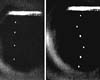
Physicists at the University of Alberta, in Edmonton, Alberta, Canada, have made a major advance in the understanding of what appears to be a new state of matter. Working in the highly specialized field of quantum fluids and solids, Prof. John Beamish, chair of the Department of Physics, and PhD student James Day, report their findings in a paper to be published in the science journal Nature on Wednesday, Dec. 6, 2007. |
|
|

| The content herein, unless otherwise known to be public domain, are Copyright 1995-2007 - SpaceDaily.AFP and UPI Wire Stories are copyright Agence France-Presse and United Press International. ESA Portal Reports are copyright European Space Agency. All NASA sourced material is public domain. Additional copyrights may apply in whole or part to other bona fide parties. Advertising does not imply endorsement,agreement or approval of any opinions, statements or information provided by SpaceDaily on any Web page published or hosted by SpaceDaily. Privacy Statement |