|
 |
 |
 |
 |
 |
 |
 |
 |

 |
Lockheed Martin To Continue Study Of Air-Launched PAC-3 Missile
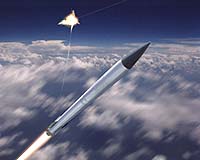
Dallas TX (SPX) Jan 17, 2007 Lockheed Martin has received a $3 million contract from the Missile Defense Agency (MDA) to continue the Air-Launched Hit-to-Kill (ALHTK) initiative, which would enable fighter aircraft to carry and launch Patriot Advanced Capability-3 (PAC-3) Missiles to intercept hostile ballistic and cruise missiles. Envisioned to protect the homeland from missile threats, ALHTK could also defend deployed forces. A risk assessment contract that concluded in April 2006 identified the feasibility of pursuing this high-payoff concept. The new Risk Reduction/Concept Definition Program will refine the risk, and further define the concept and expected system performance. "This study matures the concept of operations for launching the hit-to-kill PAC-3 Missile from tactical fighter aircraft and prepares us for the next phase, a proposed system demonstration of the capability," said Mike Trotsky, vice president - Air and Missile Defense at Lockheed Martin Missiles and Fire Control. "Equipping fighter jets with PAC-3 Missiles would provide Combat Air Patrols or scrambled aircraft the ability to defeat cruise missiles and intercept ballistic missiles in asymmetric defense and boost phase applications. Although cruise missile defense capabilities are inherent with this concept, this MDA contract will focus on ALHTK capabilities against ballistic missiles." The initial operational concept would fit in with North American Air Defense operational architecture, fielded at first on F-15C fighter aircraft. Future spiral development plans may aim to equip other aircraft with the capability. "Lockheed Martin is focused on delivering reliable advanced technologies and systems for the U.S. government and its allies," said Trotsky. "When the stakes are highest, our customers rely on proven hit-to-kill technology to assure protection of troops and assets." No other theater air defense missile can match the PAC-3 Missile in its ability to defeat the entire Patriot threat. It is the most advanced and capable interceptor in the Patriot missile system. Lockheed Martin achieved the first-ever hit-to-kill intercept in 1984 with the Homing Overlay Experiment, using force of impact alone to destroy a mock warhead outside of the Earth's atmosphere. Further testing produced today's PAC-3 Missile, which won a competition in 1993 to become the first hit-to-kill interceptor produced by the U.S. government. The PAC-3 Missile has been the technology pathfinder for today's modern missile defense systems. Currently, the Lockheed Martin-developed Aegis Weapon System, PAC-3 Missile, the Terminal High Altitude Area Defense (THAAD) Weapon System, the Medium Extended Air Defense System (MEADS) and the Multiple Kill Vehicle (MKV) utilize this proven advanced technology to deliver lethality against today's most dangerous threats. Lockheed Martin is a world leader in systems integration and the development of air and missile defense systems and technologies, including the first operational hit-to-kill missile defense system. It also has considerable experience in missile design and production, infrared seekers, command and control/battle management, and communications, precision pointing and tracking optics, as well as radar and signal processing. The company makes significant contributions to all major U.S. missile defense systems and participates in several global missile defense partnerships. Community Email This Article Comment On This Article Related Links Lockheed Martin Learn about missile defense at SpaceWar.com Learn about nuclear weapons doctrine and defense at SpaceWar.com Learn about missile defense at SpaceWar.com Learn about nuclear weapons doctrine and defense at SpaceWar.com All about missiles at SpaceWar.com Learn about the Superpowers of the 21st Century at SpaceWar.com
 Missile Defense Really Does Take Rocket Science
 Washington DC (UPI) Jan 11, 2007
The year 2006 was the year when the U.S. ballistic missile defense program remembered the Forgotten Man in BMD, and other nations forgot him. That man is the engineer. In the age of high-tech software, new wireless technology miracles churned out by the day, and captains of American industry long since replaced in the public esteem by the captains of American software, it is easy to forget the continued crucial importance of the old fashioned heavy industrial hard-hat engineer. |
|
|

| The content herein, unless otherwise known to be public domain, are Copyright 1995-2006 - SpaceDaily.AFP and UPI Wire Stories are copyright Agence France-Presse and United Press International. ESA PortalReports are copyright European Space Agency. All NASA sourced material is public domain. Additionalcopyrights may apply in whole or part to other bona fide parties. Advertising does not imply endorsement,agreement or approval of any opinions, statements or information provided by SpaceDaily on any Web page published or hosted by SpaceDaily. Privacy Statement |