|
 |
 |
 |
 |
 |
 |
 |
 |

 |
LM Demonstrates Penetrator Performance During Final RATTLRS Sled Tests
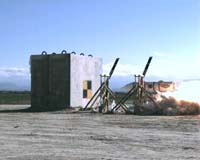
Palmdale CA (SPX) Oct 19, 2006 Lockheed Martin completed penetrator warhead sled tests to successfully conclude the high-speed payload employment testing component of its Revolutionary Approach To Time-critical Long Range Strike (RATTLRS) effort. RATTLRS is a supersonic, science and technology missile flight demonstrator sponsored by the Office of Naval Research. A simulated nose and inlet structure of an air breathing cruise missile demonstrated warhead penetration performance and survivability against hardened bunkers. During the tests, the RATTLRS airframe was accelerated to supersonic speeds of greater than Mach 2. The warhead penetrated cleanly and completely through the concrete barriers. Recovered hardware shows that the warhead remained structurally intact. This testing validates that lightweight penetrator warheads, when coupled with high-speed vehicles, provide the penetration depth of significantly heavier penetrators. According to Neil Kacena, vice president, Advanced Development Programs deputy, Lockheed Martin Aeronautics, "With this third demonstration, the RATTLRS program has shown that integrated aero-propulsion technologies enable enhanced performance capability for a variety of missions including mobile, time sensitive targets and buried targets." The sled test program is part of the overall risk reduction effort for RATTLRS, culminating in flight demonstrations in late 2007. Lockheed Martin conducted the supersonic sled test at the Holloman High Speed Sled Track in New Mexico. Previous sled tests addressed the high speed dispense of guided munitions, while this test demonstrated the performance capability of a high-speed penetrator warhead against a hardened target. Community Email This Article Comment On This Article Related Links The latest in Military Technology for the 21st century at SpaceWar.com The latest in Military Technology for the 21st century at SpaceWar.com
 Northrop Grumman To Provide US Air Force With B-1 Radar Components
 Baltimore MD (SPX) Oct 19, 2006
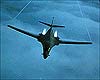
Northrop Grumman has been awarded a contract from the U.S. Air Force to provide radar system spares in support of the ongoing B-1 bomber sustainment effort. The B-1 aircraft provides a unique long range strike capability with a large and varied payload. The B-1's offensive radar system, also known as the AN/APQ-164, was designed and manufactured by Northrop Grumman in the 1980s to provide target detection, location, tracking and accurate weapon delivery capability. |
|
|

| The content herein, unless otherwise known to be public domain, are Copyright 1995-2006 - SpaceDaily.AFP and UPI Wire Stories are copyright Agence France-Presse and United Press International. ESA PortalReports are copyright European Space Agency. All NASA sourced material is public domain. Additionalcopyrights may apply in whole or part to other bona fide parties. Advertising does not imply endorsement,agreement or approval of any opinions, statements or information provided by SpaceDaily on any Web page published or hosted by SpaceDaily. Privacy Statement |