|
 |
 |
 |
 |
 |
 |
 |
 |

 |
Jekyll And Hyde Bacteria Offer Pest Control Hope
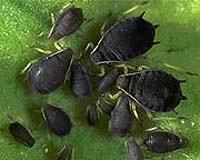
York, UK (SPX) Dec 20, 2007 New research at York has revealed so-called 'Jekyll and Hyde' bacteria, suggesting a novel way to control insect pests without using insecticides. Researchers at the University of York studied the relationship between plant-dwelling insects and the bacteria that live in them - and discovered an unexpected interaction. Plants are not 'easy meat' for insects. In fact, many insects thrive on plant food only because of the presence of a third party: symbiotic bacteria that live in the insects and provide extra nutrients. While studying interactions between black bean aphids and their associated bacteria, York researchers discovered an intriguing new category of organism that they dubbed 'Jekyll and Hyde' bacteria. Black bean aphids can live on a number of different plant species. In most situations, their internal bacteria are harmless or even beneficial - this is their 'Jekyll' side. But on certain plants, the relationship between insect and bacteria changes with the microscopic organisms exhibiting a disruptive 'Hyde' side. The insects grow and reproduce very slowly, while the bacteria themselves proliferate to very high densities in a short time - almost as if the bacteria were 'betraying' their hosts. Further experiments have suggested that the factor triggering this strange change is the composition of nutrients in the plants where the creatures live. The results, published in the Proceedings of the Royal Society B, may point the way to new methods to control aphids and other insect pests. Professor Angela Douglas, of the University's Department of Biology, said: "We now have the basis to explore precisely how these insect pests control their bacteria - and perhaps to develop ways to make the bacteria 'turn nasty' on the insects. These findings offer exciting new opportunities to control aphids and other pests without using insecticides." Community Email This Article Comment On This Article Related Links University of York's Department of Biology Farming Today - Suppliers and Technology
 Fish Farms Drive Wild Salmon Populations Toward Extinction
 Washington DC (SPX) Dec 14, 2007
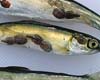
A study appearing in the December 14 issue of the journal Science shows, for the first time, that parasitic sea lice infestations caused by salmon farms are driving nearby populations of wild salmon toward extinction. The results show that the affected pink salmon populations have been rapidly declining for four years. The scientists expect a 99% collapse in another four years, or two salmon generations, if the infestations continue. |
|
|

| The content herein, unless otherwise known to be public domain, are Copyright 1995-2007 - SpaceDaily.AFP and UPI Wire Stories are copyright Agence France-Presse and United Press International. ESA Portal Reports are copyright European Space Agency. All NASA sourced material is public domain. Additional copyrights may apply in whole or part to other bona fide parties. Advertising does not imply endorsement,agreement or approval of any opinions, statements or information provided by SpaceDaily on any Web page published or hosted by SpaceDaily. Privacy Statement |