|
 |
 |
 |
 |
 |
 |
 |
 |

 |
Intelligent Solutions For The Traffic Of Tomorrow
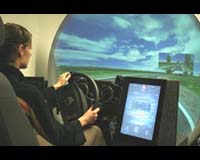
Bonn, Germany (SPX) Oct 12, 2006 Human-Machine Interface Lab at DLR Intelligent transport systems and services are the subject of the 13th ITS World Congress in London. There, from 9-12 October 2006, the German Aerospace Center (DLR) is presenting a series of lectures and an exhibition showcasing a selection of its transport research projects. DLR is using an experimental driving simulator to demonstrate its work in driver assistance systems aimed at providing greater on-road safety. Greater transport efficiency should be achieved through the methods being presented in London, based on both terrestrial and satellite traffic data capture. With its iObjects system, DLR is presenting a software package for the digital design of displays for different modes of transport. The exhibition stand in the ExCel Exhibition and Conference Centre in London, Stand F17, is also providing information on DLR expertise in transport applications for Europe's satellite navigation project, Galileo. DLR is also conducting research in Brunswick into driver assistance systems to provide more on-road safety. The Human Machine Interface Lab (HMI-Lab) being exhibited in London can be used to investigate new assistance functions in a flexible and cost-effective way. During the ITS World Congress, visitors are able to test for themselves how an assistance system can use special inhibitors or superimposed images on the display to prevent driving too close to the vehicle in front. But communication between vehicle and driver is not just via visual or audible information; it also takes place via tactile interfaces, the steering wheel or the accelerator pedal. The work on assistance systems is also supported by iObjects software developed at DLR's Institute for Flight Systems Engineering so as to create digital displays in helicopters. CoEDIT, an application based on iObjects, allows dynamic cockpit scenarios to be created. New information display methods can be produced in a very short time, including odometers and traditional tachometers to innovative displays for driver assistance systems. The software enables researchers to identify the best kind of display for the various kinds of important information needed by the driver. DLR uses a two-kilometre speed and test track in Berlin to trial sensors and new, flexible methods to capture traffic position under realistic conditions. Radar and video detectors are used to measure the reactions of drivers to changing conditions, and climate, weather and visibility data is taken into account. The researchers at the ITS World Congress are explaining how the traffic data so obtained can be optimised. According to experts, the European satellite navigation system, Galileo, has a great deal of potential when it comes to transport applications. With its EVnet experimentation and verification network, DLR is presenting a software and hardware environment in London, which allows complementary local systems to be developed to improve the efficiency and accuracy of satellite navigation systems via communications channels such as the Internet. These will support the introduction of high-accuracy and safety critical Galileo applications and services. Twenty-five of a total 27 institutes and facilities are participating in DLR's transport research, the most recent business area of the German Aerospace Center. They treat traffic as a complex, integrated and interdisciplinary system. Once again, DLR is showing itself to be an attractive collaborator for manufacturers of motor vehicles, railway rolling stock and aeroplanes, as well as for service providers and governmental authorities and companies involved in the transport field. Community Email This Article Comment On This Article Related Links German Aerospace Center Car Technology at SpaceMart.com Car Technology at SpaceMart.com
 University Team To Build A Self-Driving Car For City Streets
 New York, NY (SPX) Oct 09, 2006
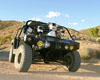
Last year, the goal was to build a vehicle that could drive itself, without human intervention, across 132 miles of desert with unpaved roads, ditches, berms, sandy ground, standing water, rocks and boulders, narrow underpasses, construction equipment, concrete safety rails, power line towers, barbed wire fences and cattle guards. Compared with this year, that was a piece of cake. |
|
|

| The content herein, unless otherwise known to be public domain, are Copyright 1995-2006 - SpaceDaily.AFP and UPI Wire Stories are copyright Agence France-Presse and United Press International. ESA PortalReports are copyright European Space Agency. All NASA sourced material is public domain. Additionalcopyrights may apply in whole or part to other bona fide parties. Advertising does not imply endorsement,agreement or approval of any opinions, statements or information provided by SpaceDaily on any Web page published or hosted by SpaceDaily. Privacy Statement |