|
 |
 |
 |
 |
 |
 |
 |
 |

 |
Insects Implicated In Evolution Of New Human Infectious Diseases
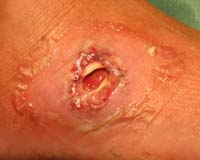
Bath, United Kingdom (SPX) Oct 26, 2004 Insects and other invertebrates are the arena for the evolution of new infectious diseases in humans, new research shows. Scientists now believe that not only are insects the carriers of some existing diseases but they are also the vehicle where recently emerging highly infectious diseases, such as the plague that killed millions in the 14th and 17th centuries, evolve. Writing in the October edition of Nature Reviews: Microbiology, the researchers point to the large reservoir of diseases in invertebrates, such as fleas and nematode worms, which are currently harmless to humans, but which could evolve quickly into a range of new diseases. As part of their research, Dr Nick Waterfield and Professor Richard ffrench-Constant [correct] from the University of Bath, and Professor Brendan Wren, from the London School of Hygiene and Tropical Medicine, are studying a new disease-causing (pathogenic) bacterium that has been identified in about a dozen people in the USA and Australia. Their study looked at the bioluminescent bacterium, Photorhabdus asymbiotica, which cause pustulant sores to appear on parts of sufferers� bodies. The researchers suspect that this new bacterium evolved recently from a well-known bacterium, Photorhabdus luminescens, which kills insects with the help of nematode worms. This family of bacteria are known as Photorhabdus (glowing rods) because they are the only terrestrial bioluminescent bacteria. The bodies of insects killed by Photorhabdus luminescens infection are left luminous. Genome studies have found close similarities between the plague-causing bacterium, Yersinia pestis, and its ancestor, Yersinia psuedotuberculosis, which has been shown to be capable of causing disease insects, at least in the laboratory. Evidence suggests that the plague could have evolved from a close insect-pathogenic ancestor as little as 1,500 years ago, an eye blink in evolutionary time, suggesting that similar scenarios are possible for other insect-associated microbes. The researchers suggest the reason that unusual infections, such as those caused by Photorhabdus asymbiotica, are not currently a large problem is that there are a range of antibiotics to treat them and insecticides that help suppress invertebrate numbers. However, they warn it could be only a short time before the parallel problems of insect resistance to insecticides and bacterial resistance to antibiotics unite to throw up new diseases that doctors will have difficulty controlling. In-built similarities between human and insect immune systems also mean that any diseases that have successfully evolved to infect insects already have a head start if they attack people. "Most scientists are looking at diseases of farm animals as the biggest threat to humans. Insects are numerous and reside in close proximity to man, yet they have been generally ignored as a potential source of microbes that could be harmful for man," said Dr Waterfield. "As well as passing microbes directly into our bloodstream when they bite us, insects can also act as a reservoir to �cook up� future human diseases. "Understanding the mechanism that the bacteria use to change their disease-causing ability is important if we are to successfully treat emerging infectious diseases before they get out of control and become epidemics. "There are countless species of bacteria in insects, and sometimes they cause emerging infectious diseases by becoming harmful to people - in other words by evolving into a new type of disease which we haven�t seen before. "The species of bacteria may have been around for centuries, but it is just that a new strain evolves that is suddenly able to infect humans as well as other animals. "The picture is further complicated by climate change, which seems to be altering the range of places insects can survive and breed, bringing new insects which can carry devastating diseases such as malaria into the Northern hemisphere." In the case of Photorhabdus luminescens, the infection is naturally resistant to several antibiotics but the relapsing infection can be combated using repeated administration of certain drugs. The researchers predict that the failure of automated hospital diagnostic machines to recognise this unusual bacterium means that many more cases of this new infection may exist. This is likely to be particularly true for the developing world, where doctors may diagnose the sore as a bad ulcer and treat immediately with antibiotics. Now that researchers are actively looking for Photorhabdus asymbiotica infection, they are beginning to find cases in countries in Asia. Community Email This Article Comment On This Article Related Links University of Bath SpaceDaily Search SpaceDaily Subscribe To SpaceDaily Express Darwin Today At TerraDaily.com
 Panda Paparrazi Swoons Over Cub Tai Shan At Washington Zoo
 Washington (AFP) Nov 29, 2005
There was 'panda-monium' at Washington's National Zoo on Tuesday as fluffy giant panda cub Tai Shan cavorted for the cameras, in his first encounter with the media pack. |
|
|

| The content herein, unless otherwise known to be public domain, are Copyright 1995-2006 - SpaceDaily.AFP and UPI Wire Stories are copyright Agence France-Presse and United Press International. ESA PortalReports are copyright European Space Agency. All NASA sourced material is public domain. Additionalcopyrights may apply in whole or part to other bona fide parties. Advertising does not imply endorsement,agreement or approval of any opinions, statements or information provided by SpaceDaily on any Web page published or hosted by SpaceDaily. Privacy Statement |