|
 |
 |
 |
 |
 |
 |
 |
 |

 |
GOES-N Set For Launch
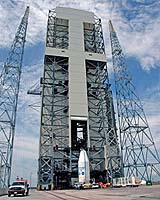
Cape Canaveral FL (SPX) Jun 20, 2005 GOES-N, the latest in a series of Earth monitoring satellites, is set to launch on June 24, 2005, with a launch window between 6:13 p.m. � 6:58 p.m. EDT. Geostationary Operational Environmental Satellites (GOES) provide the kind of continuous monitoring necessary for intensive data analysis. Geostationary describes an orbit in which a satellite is always in the same position with respect to the rotating Earth. This allows GOES to hover continuously over one position on the Earth's surface, appearing stationary. As a result, GOES provide a constant vigil for the atmospheric "triggers" for severe weather conditions such as tornadoes, flash floods, hail storms, and hurricanes. The multimission GOES series N-P is the next series of satellites. This series will be a vital contributor to weather, solar and space operations, and science. NASA and the National Oceanic and Atmospheric Administration (NOAA) are actively engaged in a cooperative program to expand the existing GOES system with the launch of the GOES N-P satellites. GOES-N is the first in the new series of spacecraft. Community Email This Article Comment On This Article Related Links SpaceDaily Search SpaceDaily Subscribe To SpaceDaily Express Launch Pad at Space-Travel.com
 Soyuz To Launch Radarsat-2
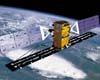 Evry, France (SPX) Jan 11, 2006
Starsem announced Monday the signing of a contract with MacDonald, Dettwiler and Associates (MDA) for the launch of MDA's RADARSAT-2 Earth observation satellite by a Soyuz launch vehicle. |
|
|

| The content herein, unless otherwise known to be public domain, are Copyright 1995-2006 - SpaceDaily.AFP and UPI Wire Stories are copyright Agence France-Presse and United Press International. ESA PortalReports are copyright European Space Agency. All NASA sourced material is public domain. Additionalcopyrights may apply in whole or part to other bona fide parties. Advertising does not imply endorsement,agreement or approval of any opinions, statements or information provided by SpaceDaily on any Web page published or hosted by SpaceDaily. Privacy Statement |