|
 |
 |
 |
 |
 |
 |
 |
 |

 |
Fission And Fusion As Iran Fronts UN Nuclear Watchdog
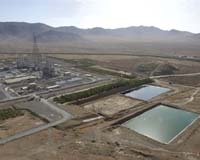
Moscow (RIA Novosti) Aug 06, 2007 A group of inspectors from the International Atomic Energy Agency (IAEA) arrived in Iran to visit a heavy-water reactor being built near Arak, in the center of the country. This time, the Iranians are ready to give the IAEA exhaustive answers to questions about their experiments with plutonium and their uranium-enrichment program. This is a real breakthrough in Tehran's long-running dispute with the nuclear watchdog. In the middle of July, Iran suddenly announced its readiness to resume contacts with the IAEA. Foreign Ministry spokesman Muhammad Ali Hosseini explained: "Our dialogue with the West on this problem has become more realistic and rational." Iran-IAEA relations can be likened to nuclear fission and fusion. Both release enormous amounts of energy, which acts as a catalyst for either severing relations or moving towards dialogue. The IAEA has many grievances against Iran. In late 2003, the IAEA Board of Governors passed a resolution stating that Iran had concealed its nuclear program from the world community for 18 years. This fact called into doubt the civilian nature of the program. The Iranians are out to prove that they have been developing peaceful nuclear energy in full compliance with the IAEA charter, but the skeptical nuclear watchdog demands that its experts should see for themselves that Iran's nuclear program is not pursuing any military purposes. The IAEA suspects Iran of developing nuclear weapons at no fewer than three secret installations. It is also worried about Iran's contacts with a clandestine network which is illegally trading in materials and spare parts for uranium-enrichment centrifuges. The IAEA believes that Iran is hiding them deep underground at some 30 different locations. Now that the recent Vienna plan has eased tensions between the two sides, the IAEA wants Iran to disclose all the required information about its nuclear program. "Not a single question should remain unanswered," said Olli Heinonen, IAEA deputy director general. Russian Foreign Minister Sergei Lavrov believes that at this point "it is important to achieve specific results and not to provoke a rupture in the relationship between the IAEA and Iran." He said that once the world is convinced that Iran's nuclear intentions are peaceful, it will step up comprehensive cooperation with Tehran, while the latter will be able to fully take advantage of its right to develop a civilian nuclear energy program. The IAEA experts' visit to Arak is cause for optimism. But not a single expert predicts an early settlement of the Iranian nuclear issue. It will take a lot of time to find a solution acceptable to all sides, all the more so since Washington at one time included Iran in the "axis of evil." The United States carries a lot of weight in the IAEA, both as a great nuclear power and the source of a quarter of its budget. This is a serious lever which Washington is using to further its own interests. The stubborn discussions with the IAEA brought the Iranian issue to the UN Security Council, which was ready to pass a new resolution slapping sanctions on Tehran, but Russia and China intervened on Iran's behalf. The Iranian nuclear saga is turning out to be more of a hassle for Russia, which is building a two-unit nuclear power plant in Bushehr, than for any other country. There seems to be no end in sight for this project - Iran has been trying to complete it for 30 years now. First, the Germans gave up on an almost finished installation because of Iran's war against Iraq (1980-1988), and now the Russians are dragging it out. Moscow has lamented more than once that it ever got involved in Bushehr. The project is without technical precedent, and Russian engineers have had to rack their brains trying to integrate the components left behind by Siemens, the German company that started work on the plant, with the Russian VVER-1000 reactor. Political tensions have made it even worse. Iran was supposed to receive the keys to its first nuclear power plant in October 2007, but the launch has been delayed again, at least for a year. "The Bushehr plant will be assembled and commissioned no sooner than the fall of 2008 - a year later than promised," said Ivan Istomin, head of Energoprogress, one of the companies involved in the project. He explained this delay by Iran's failure to pay for the project in full. In turn, Iranian managers are accusing Russia of delaying nuclear fuel supplies. But the technical procedures require that fuel should be loaded into a completed plant six months before its physical commissioning and not a day earlier. The solution is deceptively simple: things will only improve if Iran pays the Russian builders and answers the IAEA's well-founded questions. In the meantime, the world can only watch and wait. The opinions expressed in this article are the author's and do not necessarily represent those of RIA Novosti.
Source: RIA Novosti Community Email This Article Comment On This Article Related Links Learn about nuclear weapons doctrine and defense at SpaceWar.com Learn about missile defense at SpaceWar.com All about missiles at SpaceWar.com Learn about the Superpowers of the 21st Century at SpaceWar.com
 Russia Plans New Nuclear Missile Production
 Moscow (AFP) Aug 05, 2007
The Russian Navy announced Sunday it will produce a series of intercontinental missiles for its next generation of nuclear submarines. "The last test trial of the Bulava-M at the end of June was very important ... After examining the results we decided to start work on these missiles for our new armament system," navy chief Admiral Vladimir Marossin told Russian news agencies. The Bulava-M missile, with a range of more than 8,000 kilometres (4,970 miles) can hold up to 10 nuclear warheads. |
|
|

| The content herein, unless otherwise known to be public domain, are Copyright 1995-2007 - SpaceDaily.AFP and UPI Wire Stories are copyright Agence France-Presse and United Press International. ESA Portal Reports are copyright European Space Agency. All NASA sourced material is public domain. Additional copyrights may apply in whole or part to other bona fide parties. Advertising does not imply endorsement,agreement or approval of any opinions, statements or information provided by SpaceDaily on any Web page published or hosted by SpaceDaily. Privacy Statement |