|
 |
 |
 |
 |
 |
 |
 |
 |

 |
First Atlas V Rocket Stacked Vertically On New West Coast Launch Pad
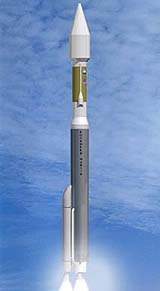
Vandenberg AFB CA (SPX) Mar 22, 2005 Lockheed Martin's first West Coast Atlas V rocket has successfully completed "booster on stand" (BOS) operations with the flight vehicle that will launch a national security payload next year. The successful BOS operation involved vertically stacking the rocket's booster stage, Centaur upper stage, and connecting segments at the newly refurbished Space Launch Complex 3 East. "We are ushering in a new era of Atlas operations here on the West Coast," said James V. Sponnick, Lockheed Martin Atlas Program vice president. "Seeing a new Atlas V on the pad caps a period of sustained construction, test and validation, and signifies a major milestone accomplishment by a very dedicated team." The first Atlas V to fly from Vandenberg is an Atlas V 411 vehicle, designated AV-006. At a total height of 191.2 feet (58.3 meters) tall, the 400 series Atlas V is equal in height to a 19-story building. The liftoff thrust for this vehicle will be 1,075,700 pounds, 70% more than the liftoff thrust of the Atlas IIAS, which previously flew three missions from SLC-3E before its retirement and final flight from Cape Canaveral Air Force Station in August 2004. BOS operations began with stacking the booster followed by erection of the two interstage adapters, the stretched 38.5 feet-tall- (11.68 meters) Centaur upper stage, and the "boat tail," which is the segment between the vehicle and the payload fairing. BOS operations took four days to complete, which is standard for Atlas V. Completion of BOS kicks off a period of further test and validation called "pathfinding" to ensure that the team, the vehicle and the facilities are prepared for the first launch. Atlas V at Vandenberg SLC-3E will use a stationary launch pad with mobile service tower, in contrast to the facilities at Cape Canaveral Air Force Station, where the rocket is stacked in a Vertical Integration Facility and then rolled to the launch pad only 12 hours before launch. Several of the former SLC-3E facilities were retained in the refurbishment, while integrating many improvements from the Atlas V program on the East Coast. Many of the same engineers and contractors from the Cape Canaveral launch pad project were involved in SLC-3E project, which further contributed to the speed and efficiency at which the team was able to conduct the refurbishment. Community Email This Article Comment On This Article Related Links Lockheed Martin Space Systems SpaceDaily Search SpaceDaily Subscribe To SpaceDaily Express Launch Pad at Space-Travel.com
 Soyuz To Launch Radarsat-2
 Evry, France (SPX) Jan 11, 2006
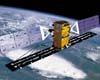
Starsem announced Monday the signing of a contract with MacDonald, Dettwiler and Associates (MDA) for the launch of MDA's RADARSAT-2 Earth observation satellite by a Soyuz launch vehicle. |
|
|

| The content herein, unless otherwise known to be public domain, are Copyright 1995-2006 - SpaceDaily.AFP and UPI Wire Stories are copyright Agence France-Presse and United Press International. ESA PortalReports are copyright European Space Agency. All NASA sourced material is public domain. Additionalcopyrights may apply in whole or part to other bona fide parties. Advertising does not imply endorsement,agreement or approval of any opinions, statements or information provided by SpaceDaily on any Web page published or hosted by SpaceDaily. Privacy Statement |