|
 |
 |
 |
 |
 |
 |
 |
 |

 |
Facing Tanning Booth Cancer Risk
UPI Correspondent Washington (UPI) April 16, 2007 Spring has arrived and with it the desire for a good tan, but getting one won't be so guilt-free this year. Half of all states have passed legislation that requires indoor tanning salons to notify their customers tanning causes skin cancer, a disease affecting one out of every five Americans. "I guess I kind of liken it to the warnings that are on cigarettes." said Diane Baker, president of the American Academy of Dermatology. "If something is a known carcinogen, I think the government has the obligation to make that known. There is information out there that might be misleading. "Frankly they are a business and they want to keep their business going." Exposure to tanning beds before age 35 increases a person's risk of getting melanoma skin cancer by 75 percent, according to the Skin Cancer Foundation. Nearly 30 million people tan indoors annually, giving the indoor tanning industry an estimated revenue of $5 billion. But now 25 states have passed legislation giving restrictions on age and notification. Some states have laws that require parental signature for minors, and some simply ban those under 16 from tanning at all. Other laws deal only with awareness and require tanning facilities to notify users of the risks involved in tanning. In light of all the recent reports on the benefits of getting vitamin D and E from sun exposure, many people have been lulled into thinking that tanning booths are healthy, said the AAD. Haojie Li, a Harvard Medical School professor and researcher, recently completed a study showing that vitamin D reduces the risk prostate cancer. And the best way of getting that vitamin D, said Li, is through a combination of diet, exercise and sun. Though every skin type is different, Li said that 10 minutes of sunny weather a day would be a healthy amount. "Sun exposure is very important," said Li. But a dark tan is not the goal. "We would use the word moderate. It is something you don't want to expose to forever." But even in healthy moderation, said Li, tanning booths do not give you the vitamin D the sun does. The Indoor Tanning Association says otherwise. "There is a lot of misinformation a lot of times spread (about) indoor tanning devices. Ultraviolet light is ultraviolet light," said John Overstreet, executive director for the ITA. He argued that getting those UV rays is the same whether you're in a tanning facility or outside. The only difference is that a tanning booth gives you a controlled UV environment. "You have trained staff there to make sure you don't get overexposed or burned," said Overstreet. "When you go outside it's uncontrolled." But Baker thinks that perspective is mistaken. "There is an impression that ultraviolet light from a tanning booth is safer than that of the sun," Baker said. "But the public needs to know ... the risk they are undertaking if they choose to go to tanning beds." Baker said that getting vitamin D from tanning booths was highly unlikely because there are two different types of UV rays. "First of all, you need very little exposure to activate the vitamin D cascade, and it's more in the UVB range that activates the vitamin D," said Baker, "and most tanning beds are UVA." Tanning can become addictive, especially for young adults, said a study released last month by the AAD. The survey was conducted at the University of Washington in Seattle, where students were surveyed using a testing method similar to that used to detect addictions of alcohol and smoking. Among those who said they have purposely tanned their skin, 18 percent of their tests showed up positive for addiction. Even those who knew they were at risk for cancer didn't seem to alter their tanning habits. Among those students who had a history of skin cancer in their family, 77 percent purposely tanned their skin and 45 percent used indoors tanning devices. In light of studies like this, the AAD is trying to prevent teenagers from tanning before it becomes an addiction. Currently they are targeting teenagers with ads that imitate instant messaging. "OMG, there R 2 many risks!" says one. "We are looking to at least have the public be aware of the risk. It's still a personal decision just like smoking is a personal decision," said Baker, "but I do think we have an obligation to at least educate people."
Source: United Press International Community Email This Article Comment On This Article Related Links Hospital and Medical News at InternDaily.com Space Tourism, Space Transport and Space Exploration News
 Earth Magnetic Field A Hazard For Lunar Astronauts
 Preston UK (SPX) Apr 17, 2007
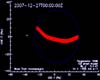
For four days every month the Moon passes through the magnetic field of the Earth and parts of the lunar surface are charged with static electricity. Next week Dr Mike Hapgood of the Rutherford Appleton Laboratory will present a model at the Royal Astronomical Society National Astronomy Meeting in Preston, which suggests that this charging may increase after the year 2012 and become an important issue for future lunar explorers. |
|
|

| The content herein, unless otherwise known to be public domain, are Copyright 1995-2006 - SpaceDaily.AFP and UPI Wire Stories are copyright Agence France-Presse and United Press International. ESA PortalReports are copyright European Space Agency. All NASA sourced material is public domain. Additionalcopyrights may apply in whole or part to other bona fide parties. Advertising does not imply endorsement,agreement or approval of any opinions, statements or information provided by SpaceDaily on any Web page published or hosted by SpaceDaily. Privacy Statement |