|
 |
 |
 |
 |
 |
 |
 |
 |

 |
ESA Begins Cryosat Launch Failure Probe
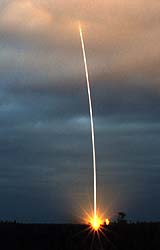
Moscow (SPX) Oct 10, 2005 Finding out exactly why a 140-million-euro (170-million-dollar) satellite designed to guage global warming crashed into the Arctic minutes after its take-off in Russia this weekend is likely to take several weeks, the European Space Agency (ESA) said Sunday. "Russian authorities have set up a commission of enquiry to analyse the causes of the failure in greater detail," ESA said in a statement. The Russian commission "should communicate its results in the coming weeks," the statement said, adding that it would work closely with another team made up of representatives of the ESA, launch vechicle manufacturer Eurockot and the Russian Khrounitchev space station. The ESA statement said the CyroSat satellite, which would have made very precise measurements of polar ice cap thicknesses, failed "following a rocket failure" due to a "launch sequence anomaly." The Russian-built launcher carrying the 711-kilo (1,564-pound) CryoSat blasted off at 1502 GMT Saturday from Russia's northwestern Plesetsk cosmodrome. But the craft never reached orbit. "The satellite did not go into orbit because of a dysfunction in the final stage," Vyacheslav Davidenko, spokesman for the Russian Space Agency explained Saturday. "We suppose that the satellite with its booster fell at the site intended for that purpose, into the Lincoln Sea, near the North Pole," Lieutenant General Oleg Gromov, deputy commander of the Russian Space Forces, was quoted as saying by ITAR-TASS news agency. The ESA official in charge of the CryoSat project, Pascal Gilles, told AFP that they had received confirmation from the Russians that the satellite had been lost after the second stage of the rocket failed to separate. "The second stage continued to burn after the onboard computer told it shut down. There was no separation between the second and third stages of the rocket, and the third failed to ignite. The whole thing ... fell into the Arctic Ocean." He said the satellite's crash resulted in the loss of five to six years of work for the engineers and scientists involved. The Rockot launcher used in the mission is a converted Soviet-era SS-19 ballistic missile with an additional Breeze-KM upper stage. Russia intends to suspend all Rockot launches until the CryoSat incident has been investigated, Davidenko said, adding that the Rockot's developers, the Khrunichev space center, had already offered an apology to the ESA for the launch's failure. ESA was expected to make an announcement Monday on what steps it would take regarding the CryoSat, which was just the first of a series of six ESA "Earth Explorer" satellites designed to explore key environmental problems. The Cryosat was to have scanned the thickness of polar ice sheets and floating sea ice to an unprecedented accuracy, providing a much-needed tool to climate scientists. Satellite data suggest that this ice cover has been shrinking at around three percent per year since the 1970s, although information about its thickness -- a critical factor in how serious the problem could be -- remains sketchy. Last month, US researchers said the Arctic ice cap is now at its smallest for more than a century. In August, a study published in the British journal Nature determined that the collapse of a huge ice shelf in Antarctica in 2002 had no precedent since the end of the last Ice Age 11,000 years ago. The Larsen B iceshelf, measuring some 3,250 square kilometers (1,250 sq. miles) in area and 220 metres (715 metres) thick, broke away from the eastern Antarctic peninsula -- a "hot spot" where temperatures have risen by around 2 C (3.6 F) over the past half-century. Greenhouse-gas sceptics say such warming is part of a natural cycle in the planet's orbit and inclination that has caused many climate shifts in the past. But the prevailing concern is that the warming is man-made, coming from carbon-gas pollution from fossil fuels that store heat from the Sun instead of letting it radiate into space. Community Email This Article Comment On This Article Related Links SpaceDaily Search SpaceDaily Subscribe To SpaceDaily Express Launch Pad at Space-Travel.com
 Soyuz To Launch Radarsat-2
 Evry, France (SPX) Jan 11, 2006
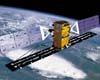
Starsem announced Monday the signing of a contract with MacDonald, Dettwiler and Associates (MDA) for the launch of MDA's RADARSAT-2 Earth observation satellite by a Soyuz launch vehicle. |
|
|

| The content herein, unless otherwise known to be public domain, are Copyright 1995-2006 - SpaceDaily.AFP and UPI Wire Stories are copyright Agence France-Presse and United Press International. ESA PortalReports are copyright European Space Agency. All NASA sourced material is public domain. Additionalcopyrights may apply in whole or part to other bona fide parties. Advertising does not imply endorsement,agreement or approval of any opinions, statements or information provided by SpaceDaily on any Web page published or hosted by SpaceDaily. Privacy Statement |