|
 |
 |
 |
 |
 |
 |
 |
 |

 |
Dukes Of Nukes Back Reliable Replacement Warhead Program
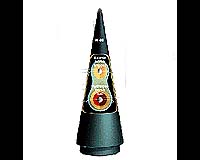
Washington DC (SPX) Jun 22, 2007 The United States should build the Reliable Replacement Warhead, a National Nuclear Security Administration official said. The Reliable Replacement Warhead, or RRW, is cheap and secure, John Harvey, the NNSA's policy planning staff director, told a press conference Friday at the New America Foundation, a Democratic-leaning Washington think tank. The NNSA is an agency of the U.S. Department of Energy. "The idea is to provide the same military capabilities as the one it replaces," Harvey said, "not to come out with whole new generations of nuclear weapons." The RRW is part of the post-Cold War Complex 2030 program that aims to reduce U.S. nuclear warheads to the lowest possible number consistent with national security. Some 2,000 would be deployed. This would be a reduction by a factor of four. That number is based more on judgment than analysis, Harvey said, because during the Cold War U.S. experts knew how many warheads were needed to strike back after an attack. "Now we can no longer predict where nuclear threats will come from," he said. Most U.S. nuclear warheads were built in the 1970s and 1980s and are being retained longer than planned, according to a 2007 Congressional Research Service report. A life extension program replaces components, and "the RRW program will simply accomplish that same goals," Harvey said. Rebuilding components as closely as possible to the original specifications means "the warhead can do what it is designed for without testing," he said. The United States carried out its last nuclear test in 1992. The United States never ratified the Comprehensive Test Ban Treaty but it does abide by its own unilateral moratorium on underground nuclear testing. Without the ability to test, scientists rely more on bigger and faster computers and improved computer models to assess changes to weapons in the stockpile. On June 6, the House Appropriations Committee cut all of the $88.8 million President George W. Bush requested for the RRW and Complex 2030 program. The appropriators called the plans "poorly thought out" and "premature." Harvey advises the NNSA administrator on policy and program decisions involving U.S. nuclear weapons. From March 1995 to January 2001, he served as deputy assistant secretary of Defense for nuclear forces and missile defense policy. Steven Monblatt, co-executive director of the British-American Security Information Council, an independent research organization, told the press conference that the RRW program looked to some like a build-up of nuclear weapons by the United States. "Nuclear weapons are still an important part of our national security," Harvey said. "They prevent large-scale wars of aggression, persuade rogue states not to sell their warheads to terrorists and contribute to the safety of our allies." He cited fellow NATO member and Iran's neighbor Turkey as an example. However, Harvey acknowledged that the U.S. government's public diplomacy about the RRW and Complex 2030 needed to improve, because he was, he said, "aware of the incorrect perception in the international community." Harvey said that concerns with assuring long-term confidence in the aging, legacy stockpile and security concerns were the primary impetus for the RRW. Unlike Britain, the United States should not rely on a single design warhead, Harvey said. "The United States has a different perspective about its role in the world and a different responsibility to a broader group of allies," he said. Developing the RRW was more than "just wargaming," Harvey said. "We are learning more today then when we were testing," he said. After the 2008 presidential elections, "Our new president must have something clever to say about them when we celebrate the 20th anniversary of the fall of the Berlin Wall in 2009," Jeff Lewis, the moderator of the meeting said when he introduced Harvey.
Source: United Press International Email This Article
Related Links
 Iran Threatens Longer Stride For Nuclear Drive
 Washington (AFP) Jun 21, 2007
Iran warned Thursday it would take a "longer stride" in its hotly contested nuclear program if it is slapped with a third set of United Nations sanctions. The comment in a Newsweek interview by Iran's top nuclear negotiator, Ali Larijani, came as Larijani prepared to discuss the row with European Union foreign policy chief Javier Solana in Portugal this weekend. |
|
|

| The content herein, unless otherwise known to be public domain, are Copyright 1995-2006 - SpaceDaily.AFP and UPI Wire Stories are copyright Agence France-Presse and United Press International. ESA PortalReports are copyright European Space Agency. All NASA sourced material is public domain. Additionalcopyrights may apply in whole or part to other bona fide parties. Advertising does not imply endorsement,agreement or approval of any opinions, statements or information provided by SpaceDaily on any Web page published or hosted by SpaceDaily. Privacy Statement |