|
 |
 |
 |
 |
 |
 |
 |
 |

 |
Darkest material developed in lab
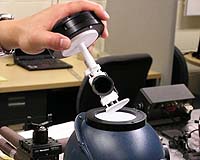
Troy, N.Y. (UPI) Feb 20, 2008 U.S. researchers at Rensselaer Polytechnic Institute and Rice University said they've created the darkest material ever made by man. The material, a thin coating comprised of low-density arrays of loosely vertically aligned carbon nanotubes that absorbs more than 99.9 percent of light, could one day be used to boost the efficiency and effectiveness of solar energy conversion, infrared sensors and other devices, Rensselaer Polytechnic said in a release. "It is a fascinating technology, and this discovery will allow us to increase the absorption efficiency of light as well as the overall radiation-to-electricity efficiency of solar energy conservation," Rensselaer physics professor Shawn-Yu Lin said in a statement. "The key to this discovery was finding how to create a long, extremely porous vertically-aligned carbon nanotube array with certain surface randomness, therefore minimizing reflection and maximizing absorption simultaneously." The findings were published in the journal Nano Letters. Community Email This Article Comment On This Article Related Links Space Technology News - Applications and Research
 The power of healing: damaged rubber repairs itself
 Paris (AFP) Feb 20, 2008
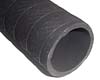
French chemists on Wednesday announced they had created rubber that heals itself after it has been cut, a breakthrough that could lead to clothes that self-mend if torn and toys that repair themselves if damaged by a tot. |
|
|

| The content herein, unless otherwise known to be public domain, are Copyright 1995-2007 - SpaceDaily.AFP and UPI Wire Stories are copyright Agence France-Presse and United Press International. ESA Portal Reports are copyright European Space Agency. All NASA sourced material is public domain. Additional copyrights may apply in whole or part to other bona fide parties. Advertising does not imply endorsement,agreement or approval of any opinions, statements or information provided by SpaceDaily on any Web page published or hosted by SpaceDaily. Privacy Statement |