|
 |
 |
 |
 |
 |
 |
 |
 |

 |
Climate Change View Clearer With New Oceans Satellite
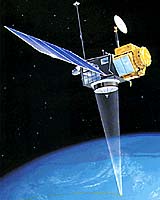
Canberra, Australia (SPX) Mar 12, 2007 Australian scientists will have access to the most detailed measurements of ocean circulation and global sea level variations following the launch next year of a multinational ocean-observing satellite - Jason-2. "The success of next year's launch will be critical for the maintenance of the global ocean-observing system," says oceanographer, Dr David Griffin, of CSIRO's Wealth from Oceans Research Flagship. "The continuation of the Jason observations is absolutely vital to gaining a better understanding of, and having ability to predict, changes that are occurring in the climate system." Dr Griffin, said the satellite's data are used to study ocean dynamics, with many applications including:
+ Global warming and climate prediction Jason-2 will be the third ocean-observing satellite to be launched by an international partnership - involving: NASA; the French space agency, Centre National d'Etudes Spatiale; and the US's National Oceanic and Atmospheric Administration - since TOPEX-Poseidon in 1992. CSIRO has been on the satellite altimetry science project team for nearly 20 years. Access to data from the first two satellites has revolutionised scientists' understanding of the Australasian marine environment and lead to a warning that the present-generation climate models may be under-estimating the true rate of change. Jason-2's core instrument, the altimeter, measures variations of sea level with phenomenal accuracy from a range of 800 kilometres above the Earth's surface, giving scientists vital clues to the internal changes occurring in the ocean. The satellite mission - its objectives and potential science achievements - will be discussed at a meeting opening in Hobart today of nearly 200 European, US and Australian scientists. Dr Griffin said ocean and climate science is taking full advantage of new monitoring technologies such as Jason-1 and Jason-2 and the Argo robotic profilers, providing near real-time information on ocean behaviour. "When delivered in near-real time, these data form the basis of operational oceanography - in other words, forecasting ocean currents and temperatures," he said. Community Email This Article Comment On This Article Related Links CSIRO Making money out of watching earth from space today Earth Observation News - Suppiliers, Technology and Application
 Space Scientists To Take The Pulse Of Planet Earth
 Canberra, Australia (SPX) Mar 12, 2007
Dozens of international satellite and modelling experts are meeting in Canberra today to discuss how to improve observations of the Earth to better understand and predict climate change, water availability, and natural disasters. CSIRO Marine and Atmospheric Research's Dr Alex Held, organiser of the two-day international meeting, says the researchers are planning to use a complex system of sensors, communication devices, storage systems and other technologies to take the Earth's pulse. |
|
|

| The content herein, unless otherwise known to be public domain, are Copyright 1995-2006 - SpaceDaily.AFP and UPI Wire Stories are copyright Agence France-Presse and United Press International. ESA PortalReports are copyright European Space Agency. All NASA sourced material is public domain. Additionalcopyrights may apply in whole or part to other bona fide parties. Advertising does not imply endorsement,agreement or approval of any opinions, statements or information provided by SpaceDaily on any Web page published or hosted by SpaceDaily. Privacy Statement |