|
 |
 |
 |
 |
 |
 |
 |
 |

 |
China Launches Two Space Experiment Satellites
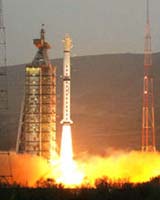
Taiyuan (XNA) Oct 24, 2006 China successfully launched two satellites for space environment exploration into space with a Long March-4B carrier rocket Tuesday morning. They were launched from the Taiyuan Satellite Launch Center in north China's Shanxi province at 7:34 a.m. Satellite A was detached from the rocket after 11 minutes of take-off, followed by the detachment of Satellite B about one minute later. Both have successfully entered preset orbits. The two satellites, which form Group-02 of Shijian (practice)-6 satellites, were manufactured by the Shanghai Academy of Spaceflight Technology (SAST) and DFH (Dongfanghong, or The East is Red) Satellite Co., Ltd. respectively. Both have a designed life of more than two years. They will mainly replace the two Shijian-6 satellites launched on Sept. 9, 2004, to conduct exploration of space environment, radiation in space and their influence, parameters of physical environment of the space, and carry out other related space experiments. The carrier rocket used in Tuesday's launch was developed and manufactured by the SAST. The launch marked the 92nd flight of Long March series of carrier rockets and the 50th consecutive successful launch of such rockets since October 1996. In 1981 China became the fourth country in the world to be able to launch more than one satellite at the same time with just one rocket. China has succeeded in such launching for many times since then.
Source: Xinhua News Agency Earlier report: China successfully fired off two experimental satellites Tuesday aboard the same Long March-4B carrier rocket from a launch center in the country's north, state press reported. The two satellites, launched from the Taiyuan Satellite Launch Center in Shanxi province, will conduct space-related experiments including exploring space environment and measuring radiation in space, Xinhua news agency said. The two satellites, both with a designed life of more than two years, were manufactured respectively by the Shanghai Academy of Spaceflight Technology and DFH Satellite, it said. The launch marked the 92nd flight of Long March series of carrier rockets and the 50th consecutive successful launch of the rocket series since 1996, when China had its most recent Long March rocket launch failure, Xinhua said. In 1981 China became the fourth country in the world capable of launching more than one satellite aboard a single carrier rocket, it added.
Source: Agence France-Presse Community Email This Article Comment On This Article Related Links Read More About the Chinese Space Program The Chinese Space Program - News, Policy and Technology China News from SinoDaily.com
 China To Launch First Direct Broadcasting Satellite
 Beijing (AFP) Oct 23, 2006
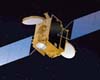
China will launch its first direct broadcasting satellite this month in a move that could end a nationwide ban on the use of private satellite dishes, state press said Monday. The SINOSAT-2 will be launched on October 29 from the Xichang launch center in southwestern China's Sichuan province and is designed to bring television signals to "every farming household" in the nation, Xinhua news agency reported. |
|
|

| The content herein, unless otherwise known to be public domain, are Copyright 1995-2006 - SpaceDaily.AFP and UPI Wire Stories are copyright Agence France-Presse and United Press International. ESA PortalReports are copyright European Space Agency. All NASA sourced material is public domain. Additionalcopyrights may apply in whole or part to other bona fide parties. Advertising does not imply endorsement,agreement or approval of any opinions, statements or information provided by SpaceDaily on any Web page published or hosted by SpaceDaily. Privacy Statement |