|
 |
 |
 |
 |
 |
 |
 |
 |

 |
Catching Them Off Balance
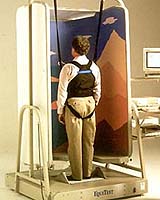
Washington DC (SPX) Oct 25, 2004 Watching Olympic gymnasts perform difficult maneuvers on a 4-inch-wide beam of wood provides excellent examples of good balance. Their skill leaves most of us wondering how they can execute such precise control over their bodies. For many victims of illness or injury, losing their sense of balance can result in drastic changes in daily life and activity. When the body's ability to maintain its balance is out of whack, simple actions we take for granted - like standing or walking - become difficult, sometimes even impossible. Whether the patient is a teenager who suffered a head injury in a car accident or a grandmother impaired by a stroke, the devastating results are the same. But patients suffering from balance and mobility disorders can benefit from clinical tools originally developed for the Space Program through NASA-funded research in the 1980s. A device called the Balance Master measures the equilibrium of astronauts returning from space. This apparatus and another system called the EquiTest - both produced by NeuroCom International, Clackamas, Ore. - are now widely used by major medical centers in the United States and abroad in diagnosing and treating their patients. Both devices use interactive technology to measure a patient's response to movement, and then provide computer-generated assessments of the person's balance and stability. These tools help in pinpointing the specific sensory and motor impairment problems, and assist in rehabilitation. Using one of these tools to repeat the testing helps a therapist measure a patient's progress. The evaluation is assisted by computer training exercises designed to address specific balance problems. They can range from movement needed for everyday activities to highly demanding athletic skills. The therapists can tailor the training to encourage specific movements that will help the patient build physical stability, endurance and confidence. Whether it's an Olympic gymnast, a returning astronaut, or a recovering stroke victim, everyone depends on the body's sense of balance in their daily lives Community Email This Article Comment On This Article Related Links Spinoff at NASA SpaceDaily Search SpaceDaily Subscribe To SpaceDaily Express Space Medicine Technology and Systems
 Genomic Sequences Processed In Minutes, Rather Than Weeks
 Richland WA (SPX) Jun 22, 2005
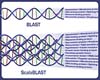
A new computational tool developed at the Department of Energy's Pacific Northwest National Laboratory is speeding up our understanding of the machinery of life - bringing us one step closer to curing diseases, finding safer ways to clean the environment and protecting the country against biological threats. |
|
|

| The content herein, unless otherwise known to be public domain, are Copyright 1995-2006 - SpaceDaily.AFP and UPI Wire Stories are copyright Agence France-Presse and United Press International. ESA PortalReports are copyright European Space Agency. All NASA sourced material is public domain. Additionalcopyrights may apply in whole or part to other bona fide parties. Advertising does not imply endorsement,agreement or approval of any opinions, statements or information provided by SpaceDaily on any Web page published or hosted by SpaceDaily. Privacy Statement |