|
 |
 |
 |
 |
 |
 |
 |
 |

 |
Carl Sagan Center Formed To Study Life In The Universe
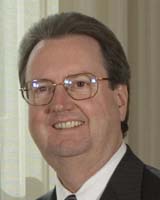
Mountain View CA (SPX) Oct 19, 2006 The Carl Sagan Center for the Study of Life in the Universe is being established at the SETI Institute in Silicon Valley to sustain a long-term commitment for research into age-old questions such as, "Are we Alone?" "Understanding the origin, evolution and distribution of life in the universe, a field often called Astrobiology, is one of the most important endeavors of the science community and all humanity," said SETI Institute Trustee and Nobel Prize winning scientist Baruch Blumberg. The Sagan Center was conceived by Scott Hubbard, the Carl Sagan Chair at the SETI Institute and visiting scholar at Stanford University. "It is our intention to create new partnerships and seek new sources of funding, including private philanthropy, to weather the cycles inherent in the governmental funding process,'' Hubbard said. "The proposed 50-percent cut in the NASA Astrobiology budget for 2007 is a clear reminder of how volatile government support for science can be,'' said Hubbard, former director of NASA Ames Research Center. "Our immediate goal is to raise $4-6M over the next 3 years so that we can sustain our top researchers. The longer term vision is to establish endowed chairs and create additional laboratory capabilities," Hubbard stated. As the Sagan Chair, Hubbard will provide ongoing strategic guidance for the new Center. Since its founding in 1984, the SETI Institute has probably been best known for its radio searches for signals from other cosmic intelligence. "However, our mission has always been to explore, understand and explain the origin, nature and prevalence of life in the universe," said Tom Pierson, the Institute's CEO.� "Since the Institute's inception, our work has included all aspects of research into life beyond Earth." When federal funding for SETI research was cut in 1994, Pierson said, "We were able to continue our search by enlisting private sector support. With the Sagan Center, we plan to do the same for the broader study of life in the universe." The Carl Sagan Center is staffed by approximately 50 principal investigators, and boasts new, state-of-the-art facilities at the Institute's Mountain View, California, headquarters. Frank Drake, former Dean of Natural Sciences at UC Santa Cruz and a member of the National Academy of Sciences, serves as the administrative director of the Sagan Center. The Sagan Center's broad spectrum of research includes such topics as the study of organisms able to thrive in extreme environments, missions to explore Mars and the moons of Jupiter for life, either existing or extinct; and new searches for extrasolar worlds that might be similar to Earth. "We believe that the search for life in the universe is a multi-generational activity that requires a institutional commitment for the long haul," said Greg Papadopoulos, chairman of the SETI Institute Board of Trustees and chief technology officer and executive vice president of research and development for Sun Microsystems. "We are delighted to have the Sagan Center as a key part of our Institute." Carl Sagan, world-renowned astronomer, planetary scientist and communicator of science, was a member of the SETI Institute Board of Trustees at the time of his death. Sagan inspired a generation of young people through his well-known Cosmos television series, the motion picture Contact and many books. "Carl would have been thrilled that this new center, devoted to pursuing the scientific questions that fascinated him most, will bear his name", said Sagan's widow and long-time collaborator, Ann Druyan. Community Email This Article Comment On This Article Related Links Carl Sagan Center Beyond Sol Life Beyond Earth Lands Beyond Beyond - extra solar planets - news and science
 A Tower Of Slime
 San Diego CA (SPX) Aug 16, 2006
In times of plenty, the uni-cellular slime mold Dictyostelium discoideum leads a solitary life munching on bacteria littering the forest floor. But these simple creatures can perform heroic developmental acts: when the bacterial food supply dries up, Dictyostelium amebas band together with their neighbors and form a multi-cellular tower designed to save the children. |
|
|

| The content herein, unless otherwise known to be public domain, are Copyright 1995-2006 - SpaceDaily.AFP and UPI Wire Stories are copyright Agence France-Presse and United Press International. ESA PortalReports are copyright European Space Agency. All NASA sourced material is public domain. Additionalcopyrights may apply in whole or part to other bona fide parties. Advertising does not imply endorsement,agreement or approval of any opinions, statements or information provided by SpaceDaily on any Web page published or hosted by SpaceDaily. Privacy Statement |