|
 |
 |
 |
 |
 |
 |
 |
 |

 |
Brightest Comet In 40 Years Dazzles
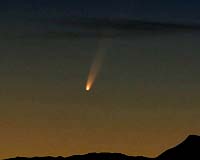
Beijing, China (XNA) Jan 16, 2007 The brightest comet for more than 40 years dazzling the skies in the past week will shine over Australia from Monday, Austrailan astronomers said. The McNaught Comet is currently at its closest approach around the sun and will become visible to West Australians from Monday for about a week. James Biggs, director of the Perth Observatory, said. "It should be easy to locate. Find a vantage point with an unobstructed view and look low on the horizon near where the sun has set, in the direction of south-west, around 9 p.m. (WDT)," Biggs said. The comet, which was discovered by Australian astronomer Rob McNaught last year, was 12 percent brighter than the sighting in 1995 of the Hale-Bopp Comet but still 25 times fainter than 1965's Ikeya-Seki Comet, according to Biggs. Northern Hemisphere observers have reported the tail of dust cloud following the comet is especially impressive when viewed through binoculars. Because of the comet's closeness to the sun, observers are warned never to look directly at the sun with the naked eye or through an optical instrument. Source: Xinhua News Agency Community Email This Article Comment On This Article Related Links The Iron and Ice Of Our Solar System Asteroid and Comet Mission News, Science and Technology
 Comet McNaught Makes For Stellar A First Light Present For STEREO Telescope
 Washington DC (SPX) Jan 15, 2007
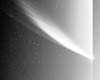
This image of Comet McNaught comes from the Heliospheric Imager on one of the STEREO spacecraft, taken Jan. 11, 2007. To the right is the comet nucleus, so bright it saturates the detector creating a bright vertical band in the image. The comet's dynamic tails extend up and to the left. |
|
|

| The content herein, unless otherwise known to be public domain, are Copyright 1995-2006 - SpaceDaily.AFP and UPI Wire Stories are copyright Agence France-Presse and United Press International. ESA PortalReports are copyright European Space Agency. All NASA sourced material is public domain. Additionalcopyrights may apply in whole or part to other bona fide parties. Advertising does not imply endorsement,agreement or approval of any opinions, statements or information provided by SpaceDaily on any Web page published or hosted by SpaceDaily. Privacy Statement |