
 |
 |
 |
 |
 |
 |
 |
 |
 |

 |
Boeing Acquires Insitu To Expand Capabilities In Unmanned Systems
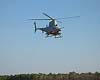
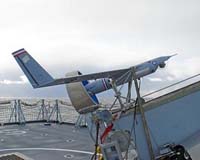
St. Louis MO (SPX) Jul 25, 2008 Boeing has announced an agreement to acquire Insitu, a pioneer in the unmanned air systems (UAS) market and leader in the design, development and manufacture of high-performance, low-cost UAS used for intelligence, surveillance and reconnaissance (ISR). Boeing and Insitu have partnered since 2002 and together developed the successful ScanEagle UAS program, which has more than 100,000 operational flight hours with the U.S. Department of Defense and international customers. Insitu's key technologies and advanced capabilities in rapid prototyping and manufacturing are driving its revenue to an anticipated $150 million this year, 70 percent higher than in 2007, and have it well positioned for the future. "Increasingly our customers are seeking advanced unmanned aerial solutions to address a wide range of requirements for ISR missions," said Jim Albaugh, president and CEO of Boeing Integrated Defense Systems. "The Boeing-Insitu team has been successfully delivering much-needed capability to the warfighter in a changing threat environment. Bringing these outstanding teams together will accelerate deployment of the next generation of unmanned systems to our U.S. and allied service members." Terms of the cash transaction were not disclosed. This transaction, anticipated to close by the end of September following regulatory approvals, does not affect Boeing's financial guidance. Once acquired, Insitu will be a separate subsidiary under Boeing Integrated Defense Systems' Military Aircraft unit. It will retain an independent operating model while benefiting from Boeing's vast resources. "This acquisition is part of a larger plan to aggressively grow our presence in the unmanned systems market," said Chris Chadwick, president, Boeing Military Aircraft. "We look forward to building upon our existing relationship with Insitu to deliver industry-leading tactical unmanned systems and services to our customers." Founded in 1994 as an entrepreneurial start-up, Insitu, located in Bingen, Wash., designs, develops and manufactures UAS for commercial and military applications. It built the first UAS to cross the Atlantic Ocean, and today has approximately 360 employees. "This agreement allows us to leverage the breadth and strength of Boeing to get our organization to the next level," said Steven Sliwa, president and CEO of Insitu. "At the same time, it allows us to retain the unique culture and environment that have driven the continuous innovation and entrepreneurial agility that have us positioned as a leader in our market." Community Email This Article Comment On This Article Share This Article With Planet Earth
Related Links UAV News - Suppliers and Technology
 Raytheon's TCS Is First NATO Standard Unmanned Ground Control System
 Falls Church VA (SPX) Jul 24, 2008
Raytheon's Tactical Control System has been certified as the first NATO standard unmanned ground control system. An industry first, it is the only ground system conforming to the NATO STANAG (Standardization Agreement) 4586 standard for the U.S. Navy Tactical Control System (TCS). |
|
|

| The content herein, unless otherwise known to be public domain, are Copyright 1995-2007 - SpaceDaily.AFP and UPI Wire Stories are copyright Agence France-Presse and United Press International. ESA Portal Reports are copyright European Space Agency. All NASA sourced material is public domain. Additional copyrights may apply in whole or part to other bona fide parties. Advertising does not imply endorsement,agreement or approval of any opinions, statements or information provided by SpaceDaily on any Web page published or hosted by SpaceDaily. Privacy Statement |
 del.icio.us
 Digg
Digg Reddit
 YahooMyWeb
 Google
 Facebook