|
 |
 |
 |
 |
 |
 |
 |
 |

 |
Bacteria From Sponges Make New Pharmaceuticals
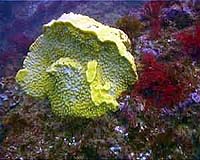
Edinburgh, UK (SPX) Sep 10, 2007 Thousands of interesting new compounds have been discovered inside the bodies of marine sponges according to scientists speaking today (Tuesday 4 September 2007) at the Society for General Microbiology's 161st Meeting at the University of Edinburgh, UK, which runs from 3-6 September 2007. Over half of the bodyweight of living sea sponges - including the sort that we use in our baths - is made up of the many different bacteria that live inside them, in the same way that we all have bacteria living in our guts which help us to digest our food. "Marine sponges are the most prolific and important source of new active compounds discovered in the last twenty or thirty years in our seas. We thought it likely that many of the interesting new compounds we were discovering inside sea sponges were actually being made by the bacteria inside their bodies, not the sponges themselves", says Dr Detmer Sipkema of University College Berkeley, in California, USA. Unfortunately the scientists discovered that it is very difficult to grow these bacteria in the laboratory, as the environment inside a sponge is significantly different from conditions in the surrounding seawater. Currently, only between one in a hundred and one in a thousand types of bacteria can be cultured artificially. "We are trying to culture the other 99% by simulating the microenvironment in the sponge where the bacteria live", says Dr Sipkema. "The next step will be to identify which bacteria are responsible for the production of the most medically interesting compounds and try to culture these on a larger scale. Most attempts to properly test these important bioactive compounds in hospital patients have failed because doctors simply cannot get enough of the products to prove that the clinical trials are effective or safe". So far, by trying a lot of different cultivation methods, the scientists have been successful in culturing about 10% of the different sorts of bacteria that live in the sponges. As well as their attempt to produce useful pharmaceutical compounds on a commercial scale, the researchers believe that successfully culturing these little known bacteria will give new insights into evolution. "Marine sponges were the first multicellular organisms to evolve on earth that are still alive. This implies that the relationship between the sponge and its bacterial inhabitants may also be very old", says Dr Detmer Sipkema. "Therefore sponges are interesting to study the evolution of symbiosis, teaching us about the way different organisms have developed their mutual relationships". Community Email This Article Comment On This Article Related Links Society for General Microbiology Hospital and Medical News at InternDaily.com
 Nanowire Coating For Bone Implants And Stents
 Fayetteville AK (SPX) Sep 04, 2007
University of Arkansas researchers have found a simple, inexpensive way to create a nanowire coating on the surface of biocompatible titanium that can be used to create more effective surfaces for hip replacement, dental reconstruction and vascular stenting. Further, the material can easily be sterilized using ultraviolet light and water or using ethanol, making it useful in hospital settings and meat-processing plants |
|
|

| The content herein, unless otherwise known to be public domain, are Copyright 1995-2007 - SpaceDaily.AFP and UPI Wire Stories are copyright Agence France-Presse and United Press International. ESA Portal Reports are copyright European Space Agency. All NASA sourced material is public domain. Additional copyrights may apply in whole or part to other bona fide parties. Advertising does not imply endorsement,agreement or approval of any opinions, statements or information provided by SpaceDaily on any Web page published or hosted by SpaceDaily. Privacy Statement |