|
 |
 |
 |
 |
 |
 |
 |
 |

 |
Nanowire Coating For Bone Implants And Stents
Fayetteville AK (SPX) Sep 04, 2007 University of Arkansas researchers have found a simple, inexpensive way to create a nanowire coating on the surface of biocompatible titanium that can be used to create more effective surfaces for hip replacement, dental reconstruction and vascular stenting. Further, the material can easily be sterilized using ultraviolet light and water or using ethanol, making it useful in hospital settings and meat-processing plants Wenjun Dong, Tierui Zhang, Lisa Cooney, Hong Wang, Yanbin Li, Andrew Cogbill, Vijay Varadan and Z. Ryan Tian of the University of Arkansas, Ying-Bing Jiang of the University of New Mexico, and Joshua Epstein of the University of Arkansas for Medical Sciences report their findings in an upcoming issue of the journal Chemistry of Materials. The researchers used an alkali and heat to create titanium oxide-based ceramic nanowires that coat the surface of a titanium medical device. "We can control the length, the height, the pore openings and the pore volumes within the nanowire scaffolds" by varying the time, temperature and alkali concentration in the reaction, said Z. Ryan Tian, assistant professor of chemistry and biochemistry in the J. William Fulbright College of Arts and Sciences. "This process is also extremely sustainable," requiring only that the device be rinsed in reusable water after the heating process. Reconstructive bone surgeries, such as hip replacements, use titanium implants. However, muscle tissue may not adhere well to titanium's smooth surface, causing the implant to fail after a decade or so and requiring the patient to undergo a second surgery. Tian and his colleagues created a nanowire-coated joint and placed it in mice. After four weeks, the researchers found that tissue had adhered to the joint. "We saw beautiful tissue growth - lots of muscle fibers," Tian said. "We've added one more function to the currently-in-use titanium implant." Because the researchers can control the size and shape of the pores in the nanowire scaffold, the material also could be coated onto stents used in patients with coronary artery disease and in potential stroke victims. Conventional stents sometimes become reclogged with fat after implantation. The most recent stent used to address this problem, called the drug-eluting stent, consists of a polymer coating mixed with the drugs, but the coating may be vulnerable to biodegradation, and may not function for long. The nanowire coating without the degradation problem could be used to carry drugs that would help keep the arteries clear over a long period of time. "This drug release could be applied to the angioplasty catheter's surface," Tian said. In addition to these biomedical applications, the nanofiber scaffold has a property that may make it useful in both hospitals and food processing plants: The material, when rinsed in water and exposed to ultraviolet light, kills more than 99 percent of bacteria on its surface. This effect occurs because photons from the light cause a charge separation on the material, splitting water molecules into free radicals that destroy the bacteria. Alternatively, immersion in 70 percent ethanol completely sterilizes the material, allowing growth of cells/tissues in the laboratory prior to implantation. This property could prove extremely useful in bacteria-prone environments, performing such functions as sterilizing on-site surgery hospitals used during military actions or cleaning surfaces in meat-processing plants. "You could just use water to rinse and UV light to sterilize surfaces," Tian said. The researchers have applied for a provisional patent for the multifunctional nanowire bioscaffolds on titanium or titanium-containing alloys such as Nitinol. Community Email This Article Comment On This Article Related Links American Chemical Society Hospital and Medical News at InternDaily.com
 MIT Probes Secret Of Bone's Strength
 Boston MA (SPX) Aug 29, 2007
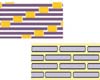
Scientists and engineers are eager to understand the secret behind bone's lightweight toughness so they can mimic it in the design of new materials, but experimental studies have revealed a number of different strength mechanisms at different scales of focus, rather than a single theory. |
|
|

| The content herein, unless otherwise known to be public domain, are Copyright 1995-2007 - SpaceDaily.AFP and UPI Wire Stories are copyright Agence France-Presse and United Press International. ESA Portal Reports are copyright European Space Agency. All NASA sourced material is public domain. Additional copyrights may apply in whole or part to other bona fide parties. Advertising does not imply endorsement,agreement or approval of any opinions, statements or information provided by SpaceDaily on any Web page published or hosted by SpaceDaily. Privacy Statement |