
 |
 |
 |
 |
 |
 |
 |
 |
 |

 |
BMD Games And The Caucasus Crisis Part One
Moscow (UPI) Aug 28, 2008 On Aug. 14 Poland and the United States signed an agreement on the deployment of 10 ground-based missile interceptors on Polish territory. The timing of the event leaves little doubt that it is linked with the recent conflict in the Caucasus. Like Washington, Warsaw unreservedly backed the former Soviet republic of Georgia at all levels, and the Polish government eventually agreed to host U.S. missile defenses. Thus, a third positioning missile defense area has become reality. Despite Russia's repeated appeals to the United States to clarify the status of missile defense, Moscow has not yet received a meaningful answer. Russian Foreign Minister Sergei Lavrov said that the "U.S.-promised transparency and confidence-building measures have not yet become reality." Russia has serious differences on missile defense with the North Atlantic Treaty Organization, which cannot decide on its format in Europe. Will Russia be included in European missile defense, or will it be merely a segment of U.S. national missile defense? These questions became urgent in 2007, when the Americans started carrying out their plan of deploying radars and interceptor missiles by launching geodesic and surveying work at the future sites on Polish and Czech territory. They also began intergovernmental talks to draft agreements on their legal status. The Czech Republic will host a radar station, in exchange for which it is hoping to get some benefits, primarily participation in military R&D, and access to any information received through the radar. Warsaw has won a promise from Washington to augment its armed forces in exchange for placing 10 GBIs on Polish territory. Polish Prime Minister Donald Tusk also demanded additional security guarantees for his country from the United States. Washington will not hesitate to give such guarantees, but what are they worth? Russian missile defense systems will not be able to distinguish missile interceptors launched from Polish territory from ballistic missiles. Any launch of an interceptor will automatically result in retaliation, and not only at the interceptor deployment site. A Soviet warning system once mistook a Norwegian-launched high-altitude weather rocket for a ballistic missile. It is clear that the Americans will not limit themselves to Poland and the Czech Republic. Experts believe that after refining the technology of creating a missile deployment site in Poland, the United States will be able to build one positioning area per year. In the near future, Russia will face dozens of positioning areas along its borders. Russia is also concerned over possible deployment of U.S. missile defense elements in Ukraine. U.S. officials consider Ukraine to be well-versed in missile technologies. This is a major difference from Poland and the Czech Republic, and makes it an even more attractive host for missile defense elements. That would bring U.S. missile defense even closer to Russia's borders. (Part 2: Exploring Russia's missile deployment options) (Yuri Zaitsev is an academic adviser at the Russian Academy of Engineering Sciences in Moscow. This article is reprinted by permission of RIA Novosti. The opinions expressed in this article are the author's and do not necessarily represent those of RIA Novosti.) (United Press International's "Outside View" commentaries are written by outside contributors who specialize in a variety of important issues. The views expressed do not necessarily reflect those of United Press International. In the interests of creating an open forum, original submissions are invited.) Community Email This Article Comment On This Article Share This Article With Planet Earth
Related Links Learn about missile defense at SpaceWar.com Learn about nuclear weapons doctrine and defense at SpaceWar.com All about missiles at SpaceWar.com Learn about the Superpowers of the 21st Century at SpaceWar.com
 BMD Focus: Patriots for Poland
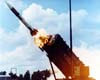 Washington (UPI) Aug 27, 2008
 Everyone is focusing on those anti-ICBM GBI interceptors the United States will deploy in Poland, but the 96 Patriot interceptors to be based there to protect Polish installations will play a crucial role in defending Western Europe, too. |
|
|

| The content herein, unless otherwise known to be public domain, are Copyright 1995-2007 - SpaceDaily.AFP and UPI Wire Stories are copyright Agence France-Presse and United Press International. ESA Portal Reports are copyright European Space Agency. All NASA sourced material is public domain. Additional copyrights may apply in whole or part to other bona fide parties. Advertising does not imply endorsement,agreement or approval of any opinions, statements or information provided by SpaceDaily on any Web page published or hosted by SpaceDaily. Privacy Statement |

 del.icio.us
 Digg
Digg Reddit
 YahooMyWeb
 Google
 Facebook